If your Wolf oven won’t get hot enough, the cause is usually one of five things: it has not finished preheating, the temperature is running low because of a sensor or calibration offset, a heat source is only partly working, the door is losing heat, or the power or gas feeding the oven is short. The first two take a few minutes to rule out at home; the rest need a technician. This guide walks through them in the order that saves the most time, and it assumes the oven still lights up and runs but never reaches the temperature you set.
Is the oven really too cool, or just not done preheating?
Start by ruling out the simplest explanation. An oven can take a surprisingly long time to reach a high setting, particularly if it is loaded with racks, stones or a heavy pan, and the beep or light that signals preheat is easy to miss. Wait for the signal, then give it a few more minutes so the walls and racks catch up with the air. Many people judge the oven by the first beep and put food in too soon, which is how an oven that is working fine seems to run cool.
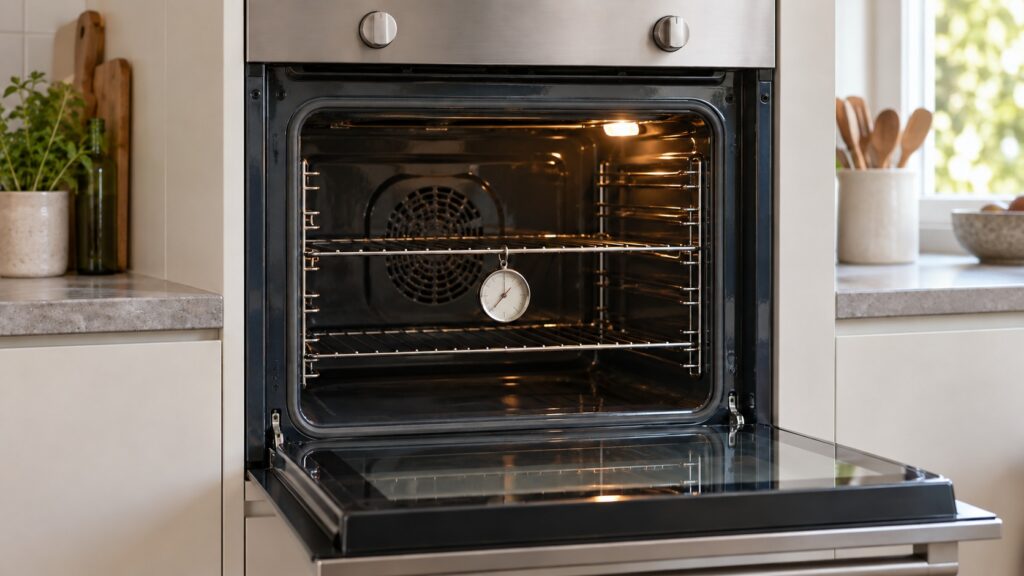
Next, confirm the problem with a real measurement. Place a basic oven thermometer on the center rack, preheat to a common temperature, wait well after the signal, and compare. If the thermometer agrees with the display, the oven is fine and your recipe or expectations need adjusting. If it is far below, you have a genuine problem. Take the reading twice on different days before you decide.
Could the temperature sensor be reading wrong?
The oven controls its heat by watching a sensor in the cavity. If that sensor drifts or fails, the control may think the oven is hotter than it is, shut the heat off early and leave the cavity cool. It may show a normal display while it does so. Our Wolf oven not heating guide for RTD faults and the entry on the RTD oven sensor explain how this sensor works and why a faulty one can cause real trouble.
Some ovens let you adjust the temperature offset in the settings, and your manual explains how for your model. A small adjustment is reasonable if the oven is consistently a little off, but it is a workaround and not a repair. A large gap, or a gap that keeps changing, points at the sensor or the control and should be diagnosed. If the oven goes the other way and runs too hot, that is a different problem, covered in our Wolf oven over-temp guide.
Is a heat source only partly working?
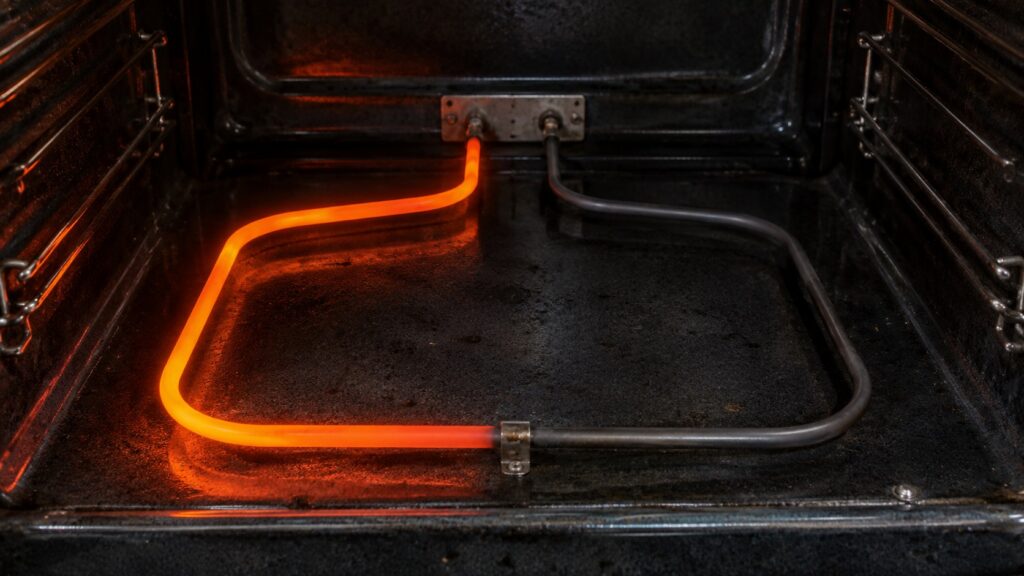
An electric oven heats from a bake element and a broil element, and a convection model adds a fan. If one element has failed, the oven will still warm up but may stall well short of the set temperature or take far longer. Look through the window: a bake element that stays dark while the oven claims to be heating is a clear sign. Do not touch the elements. Check them only by sight and only with the oven off and cool.
On a gas model, the equivalent problem is a weak igniter. The igniter must glow brightly enough to open the gas valve, and an igniter that has weakened may light the oven late or not at all. Our gas oven igniter failure guide goes through the signs. The switching parts can fail too, and our guide to how a Wolf oven relay board controls heat shows why a good element can still get no power.
Is heat escaping from the oven?
Check the door. A worn gasket, a seal that has come loose, a door that sits crooked or a hinge that has dropped can all let heat out as quickly as the elements put it in. Look for dark staining or gaps around the door, and feel for hot air around the edge during a preheat. Also check that nothing blocks the vent and that no foil lines the oven floor or covers the vent slots. Our Wolf oven door and hinge care guide explains what to look for.
An oven that bakes unevenly as well as cool often has a door or airflow cause, and our Wolf oven uneven baking guide covers the overlap. If the door seals well and the vents are clear, the shortfall is more likely inside the oven.
Could the power or gas supply be short?
A built-in electric oven runs on a 240 volt supply made of two live legs. If a breaker half-trips or one leg is lost, the oven can still light the display and run the fan but struggle to heat. A tripped or weak breaker, a loose connection in the junction box or a utility problem is behind this, and it is not a do-it-yourself fix. A gas oven can be starved by low gas pressure or a partly closed shutoff, which is a job for a qualified professional.
If the oven is also tripping a breaker, smells hot or burning, or shows scorching at the cabinet, switch it off and call. Our symptom page on an oven that will not heat is the quick lookup, and the Wolf oven repair page explains what a visit covers.