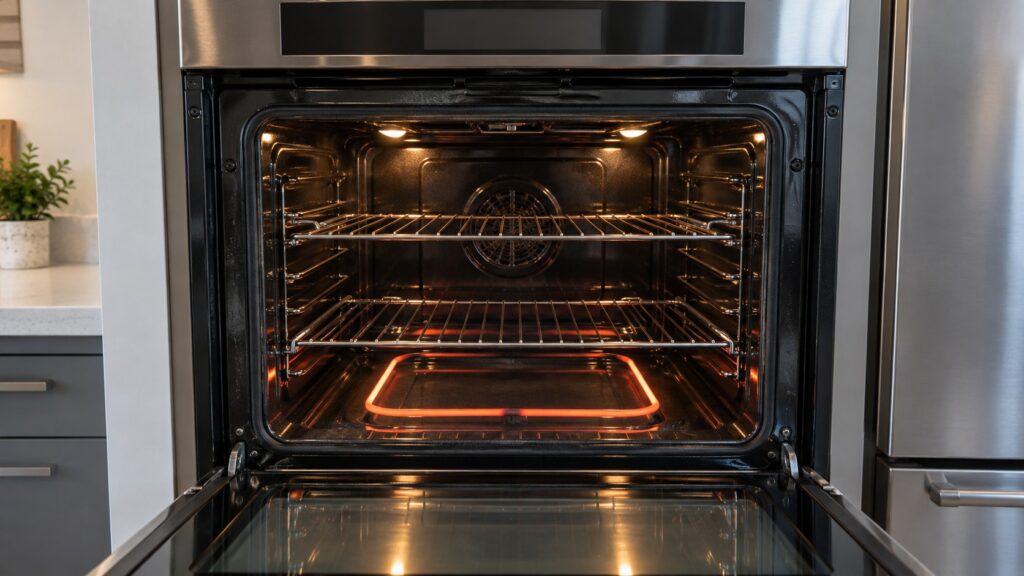
A Wolf oven relay board is the switching stage between the oven’s brain and its heavy parts: the control board decides what should happen, and the relay board closes and opens the circuits that actually power the bake element, the broil element and the fans. When people ask why a Wolf oven shows an error, or why it lights up but never heats, the relay board is often part of the story, which is why it helps to understand what it does before you decide what to check.
What does a Wolf oven relay board actually do?
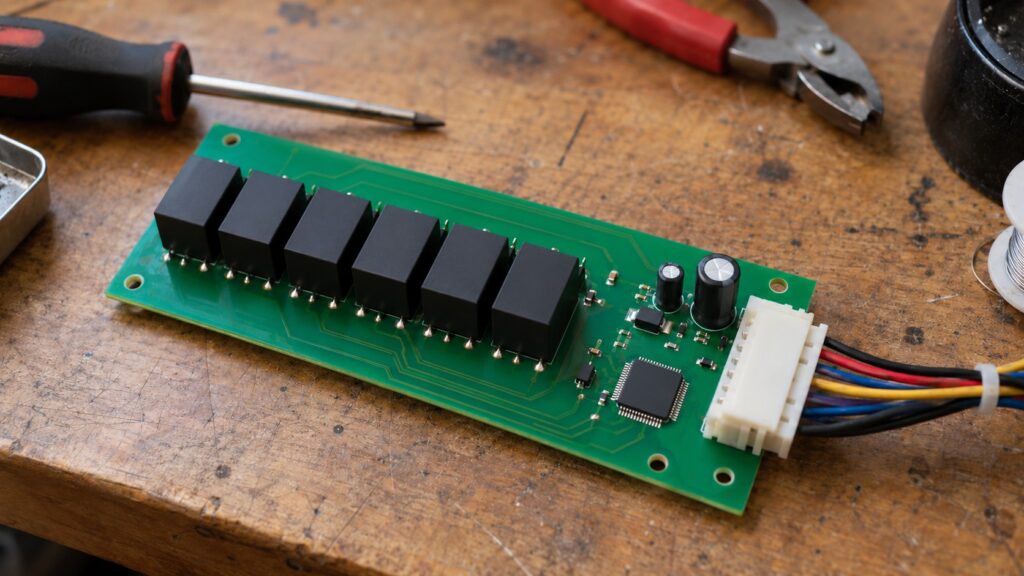
Think of the control board as the thinker and the relay board as the muscle. The control board runs on low-voltage electronics and cannot safely carry the current an oven element needs. A relay is an electrically operated switch: a small signal from the control makes a contact inside the relay close, which lets the full oven current flow to a load. When the signal stops, the contact opens and the load goes off. Each heating element and each fan has its own switching path, which is how the oven can run the bake element without the broil element, or run a fan without heat.
On many Wolf models the relay stage is a separate board or a distinct section of the electronics, wired to the control by a harness. That arrangement keeps the high-current parts apart from the delicate ones, but it also means a communication problem between the two boards can look like a heating problem. Layouts vary by model and by production year, so check your manual and model page for how yours is built.
How does the oven know when to switch the elements on and off?
The control compares the temperature you asked for with the temperature the oven sensor reports. While the oven is below target, it commands the relays to close and send power to the elements. As the cavity approaches the set point, the control opens the relay and lets the oven coast, then closes it again when the temperature falls. That repeating cycle is why you can sometimes hear a faint click from the oven as it holds temperature, and it is normal. Our guide to the RTD oven sensor explains the sensing half of this loop.
The relays also take part in safety. The control checks that the circuits behave the way it expects and will stop the oven if something looks wrong. This is the reason a relay fault can produce a message even when the elements themselves are fine: the control saw a switch that did not do what it was told, and it chose to stop the oven instead of carrying on. Our Wolf oven over-temp guide shows a case of the control protecting the oven.
Why does a relay problem make an oven show an error or stay cold?
A relay can fail in two broad ways. It can refuse to close, so the element never gets power and the oven stays cold even though the display looks normal. Or it can stick closed, so a load keeps receiving power after the control has asked for it to stop. This site has separate pages for open and shorted relay conditions, and the control watches for both because each one is a different kind of risk. We keep those pages for the code lookup itself and link them here for the meaning: see the oven relay open page and the oven relay shorted page.
Ranges have their own version of this. A fault on the lower oven relay shows up on our range lower relay page, and our range communication error and relay guide explains why a lost connection between boards can imitate a bad relay. If you want the wider picture of what Wolf’s M Series displays, the M Series oven codes guide is the place to start.
What can you check safely before calling for service?
Start with the simple things. Confirm the oven has power by checking that the clock and display work, then switch the oven off at its breaker for a couple of minutes and restore it, since a brief power loss can clear a one-off confusion between boards. Make sure no cookware, foil or racks are blocking the vents or sensor. Note exactly what the display says and what the oven did just before, because the sequence helps a technician decide whether the problem is a sensor, a relay, a connector or the control itself.
Stop there. The relay board sits behind the oven’s rear or top panel, close to line voltage, and the oven must be fully isolated before anyone touches it. Even with the breaker off, stored heat and sharp metal edges are risks. We do not recommend opening the cabinet yourself. Replacing a relay board is a job for someone who can test the circuits, confirm the harness and verify the repair under heat.
Is a relay board repair worth it on an older Wolf oven?
Usually, yes, when the oven is otherwise sound. A relay or its board is a replaceable part, not a sign that the whole oven is finished, and the surrounding structure of a Wolf wall oven or range is built to outlast its electronics. The question is whether the board is the only fault. If the display, the sensor and the door lock are also misbehaving, a larger electronic problem is likelier, and it is worth reading our Wolf oven repair or replace guide before you decide.
A technician can usually tell quickly whether you have a bad relay, a loose connector or a sensor problem by measuring rather than guessing. That is the real value of a visit: replacing the wrong board is the most common way to spend more than a repair should cost.