The Wolf oven control board repair or replace question has a simple default answer: repair the oven when the control board or a related board is the only thing that has failed and the oven is otherwise sound, and replace the oven when the board is one of several faults, the oven is old and worn, or you were already planning to redo the kitchen. The decision gets expensive when people replace a board that was never the problem, so the first job is to prove which part has failed before any money changes hands.
When is a failing oven control board worth repairing?
A control board is worth repairing when it is the only thing wrong. A Wolf oven is a heavily built appliance, and the cavity, the door, the convection system and the hinges often outlast the electronics by many years. If a technician confirms the board has failed and everything else tests sound, replacing the board returns an otherwise excellent oven to service for far less than a new built-in oven and the installation work around it.
It is also worth repairing when your oven sits in a custom cutout that took real effort to build. A replacement oven has to match the opening, the electrical connection and the trim, and mismatches mean carpentry. Our Wolf oven repair or replace guide covers the broader decision, and this one narrows it to the electronics.
Which parts get mistaken for the control board?
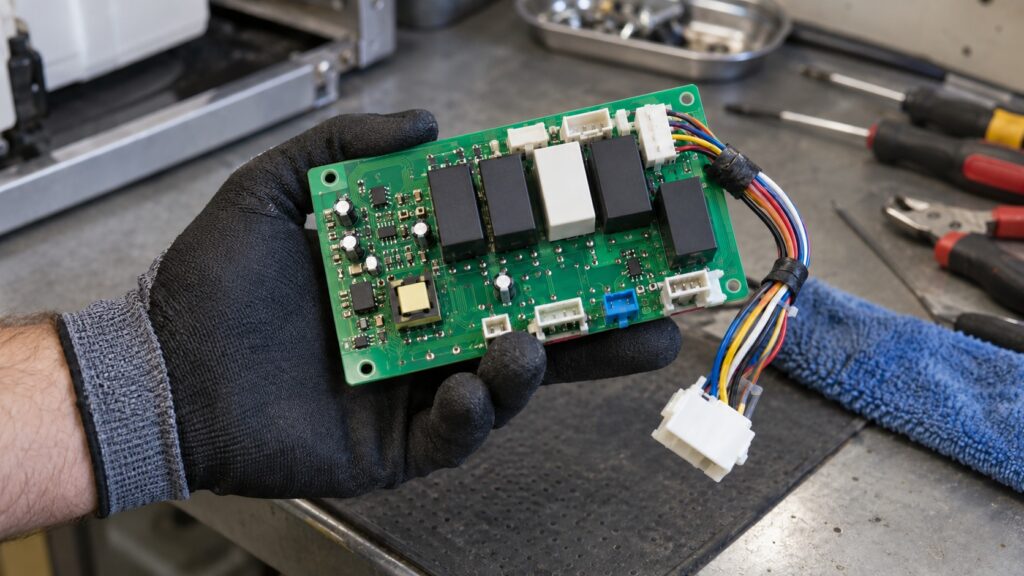
Several cheaper parts produce symptoms that look like a dead control. A failed relay board can leave a display that works perfectly while the oven refuses to heat, and our guide to the Wolf oven relay board explains why. A drifting temperature sensor can make the oven cut out or run cold without any board fault. A door lock that does not report properly can stop a cycle, and a sticking keypad can flood the control with false signals.
Connectors matter too. A terminal that has run hot leaves a darkened plug and an intermittent contact, and a board is replaced and the same fault returns because the connector was the real issue. This is why we ask you not to guess. A technician tests the supply, the sensor, the relays and the connections before condemning the board.
What do the common symptoms tell you?
Look at the pattern, not just the message. A communication error between the control and the relay board points at the link between the two, which can be a cable or either board. Our guide to a Wolf range communication error explains that family. A blank display with an oven that still heats suggests a display or its supply. A keypad that beeps and ignores your touch is a different complaint, covered by our touchpad guide for the same type of fault on another appliance.
Heating that stops at random after the oven has run for a while is the one that most often means failing electronics, because the fault appears and disappears as parts warm up. Note when it happens, which mode you were using and what the display showed. That log is worth more to a technician than any guess about the part.
When is replacing the whole oven the better choice?
Replace the oven when the electronics are only one symptom of a tired appliance. A cavity with rust or a damaged coating, a door that no longer seals, a hinge that sags, and a second failing component are all signs that you will keep paying for repairs. The same goes for an oven where the board is no longer available for your model, which a technician can check before you decide.
Replacement is also reasonable when you are changing the kitchen. If the cabinetry, the countertop or the hood is being replaced, the cost of a new oven shares the labor and lets you choose a model that fits the new design. Look at our Wolf wall oven buying guide for the choices.
What does replacing the oven involve?
More than the price of the oven. The new unit must fit the cutout, line up with trim and neighboring units, and match the electrical supply, and the old oven has to come out, which is heavy, awkward work. If you have a stacked pair, one replacement may not match the other in finish, and mixed handles are a common regret. Our Wolf wall oven installation guide lists what to check.
Weigh that against a repair that takes a single visit, and be honest about how long you plan to keep the house or the kitchen. A confirmed single board fault on a good oven is a repair. Anything else deserves a second look.
How should you decide, in practice?
Ask the technician three questions: what exactly failed, what else tested sound, and is the part available for your model. Get the answers in plain words, and ask whether the same fault can return if the cause was a power surge or a hot connector. A reputable technician will say so if the board may not be the whole story.
If you are unsure, our Wolf oven repair page explains how a diagnostic visit works, and you can book a visit to have the fault confirmed before you decide.