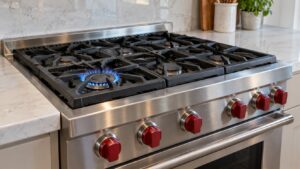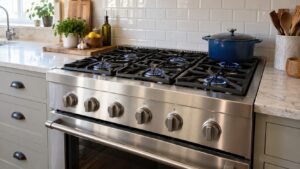
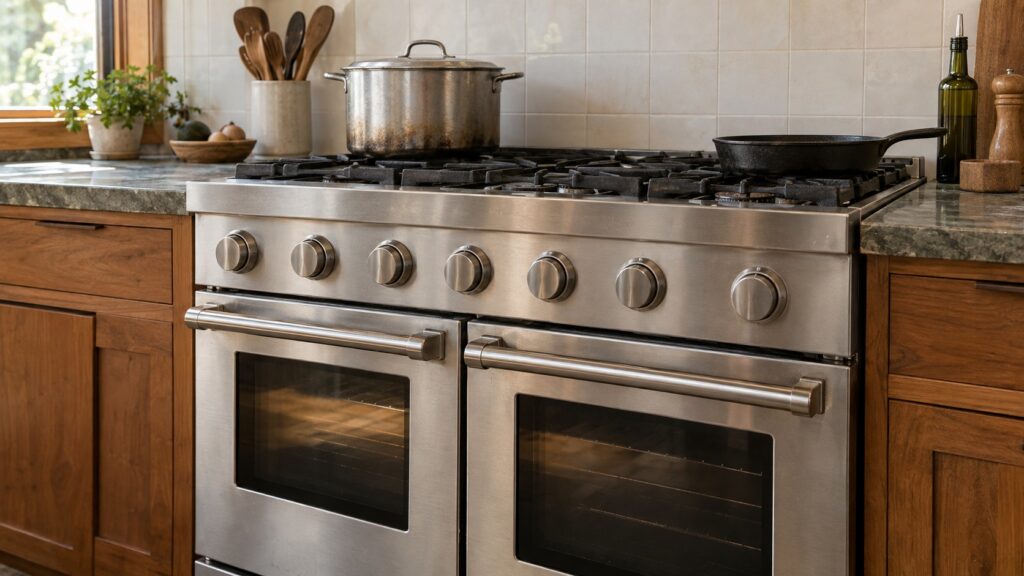
There is no single number for how long Wolf ranges last, and we will not invent one. How long a Wolf range lasts depends on how it is used, how it is cleaned and whether the parts that wear out are looked after, and a sound range is usually worth repairing when a common part fails. What matters more than age is what has failed: a worn igniter, sensor, door lock or fan on an otherwise healthy range points to repair, while a major control-board failure on a very old range where parts are scarce is where replacement starts to make sense. For the exact design life of your model, your owner’s manual is the source.
How long do Wolf ranges last?
Search results are full of confident figures, but a number without a source is a guess, and a range is not one part. A Wolf range is a cooktop, an oven, controls and a set of wearing parts such as igniters, sensors, a door lock and fans. Each ages differently. The burners and cast grates on a gas range are simple parts that basic care keeps in good shape, while an igniter or an oven sensor is a part that can need replacing at some point. Treat any lifespan figure as an average that hides a lot of individual cases.
What we can say from the service side is that our repair-or-replace guide describes Wolf ranges as built to a commercial-derived standard, and that most failures we see on our repair pages are common parts on an otherwise sound unit. That is why our Wolf range repair or replace guide leans toward repair. A range that has been maintained and has one failed part is a very different case from one that has several problems at once.
What makes a Wolf range wear out faster or slower?
Four things do most of the work. The first is how often you cook and how hard. A range that is used every day for large meals works its igniters, fans and door lock more than one used a few times a week. The second is cleaning. Spilled food that blocks burner ports causes lighting problems, and moisture left in the igniter wells causes clicking. Our Wolf range maintenance guide gives the routine: clear the ports, seat the caps, dry the igniter wells after wet cleaning and run self-clean sparingly.
The third is the platform. A gas GR range has a gas oven, while a DF dual fuel or IR induction range has an electric oven that reports error codes, so a failing part tends to announce itself on the display. The fourth is the installation: a range that is level, correctly supplied and properly ventilated is under less stress than one that is not. The ventilation side is covered in our hood makeup air guide.
Which signs of age are worth checking on a Wolf range?
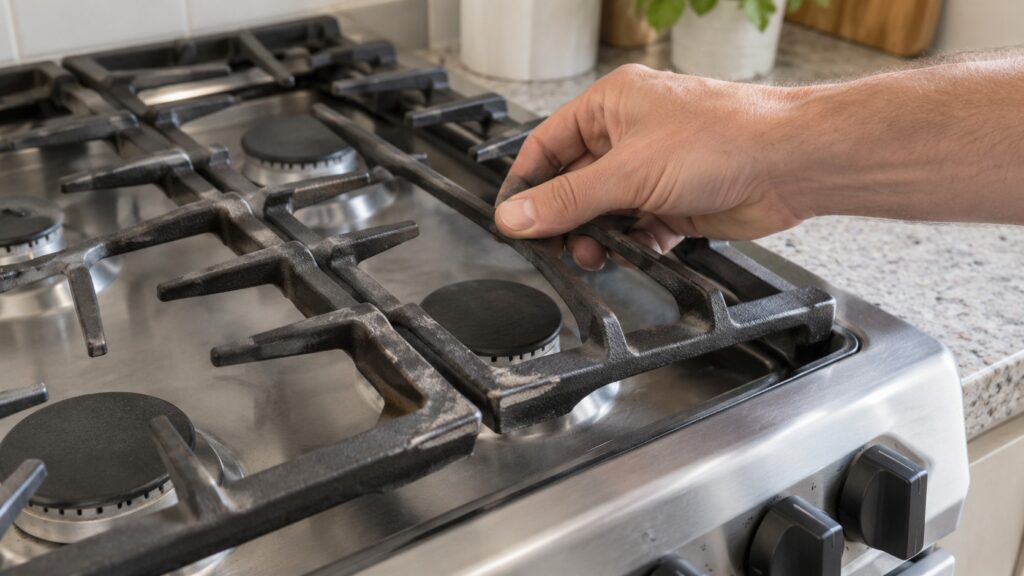
You can look for wear without opening anything. With the range off and cool, check the burner grates and caps for chips, warping or a finish that has worn through, and check that the caps sit flat. Check the oven door gasket for gaps or flattened sections, because a door that does not seal well lets heat escape. Check that the knobs turn smoothly and that each burner lights and holds an even ring of flame. Note how the oven performs: a range that bakes unevenly or runs hot or cold may need a sensor checked rather than a replacement.
Write down what you see, with dates. A repeated problem is more informative than a single event. If a code returns after a reset, or the same burner fails again after cleaning, you are likely dealing with a part rather than a cleaning issue. Chipped finishes and worn paint on a grate are cosmetic and do not by themselves mean the range is at the end of its life.
When does repair make more sense than replacing a Wolf range?
Repair usually makes sense when the failure is one identifiable part and the rest of the range is sound. On our repair pages the typical cases are a gas oven igniter that glows but no longer opens the gas valve (see Wolf gas oven igniter failure), an RTD oven sensor reading out of range, a door lock that fails after self-clean, a cooling fan or a relay. A single part swap often makes more sense than replacing a sound range, and it keeps a working appliance in use.
It also helps that a diagnosis comes before a quote. A technician reads any stored code and tests the suspected part, so you know what failed before you spend anything. Our Wolf range repair cost guide explains what drives the cost in words, and our Wolf range repair page explains how a visit works.
When does it make sense to replace a Wolf range?
Replacement starts to make sense when several things are true together: the range is very old, the failure is a major one such as the oven control board, and parts for your model are scarce or the repair would leave other worn parts behind. A range that is no longer right for your kitchen is a separate reason, for instance if you want to change fuel type or width. If you are weighing a replacement, our Wolf range buying guide explains the gas, dual fuel and induction platforms.
Whatever you decide, do not decide on age alone. Confirm the cause first. The same outward sign can be a cheap part or a costly one, and only a hands-on diagnosis tells the two apart. Never attempt gas-line or internal repairs yourself on an older range.