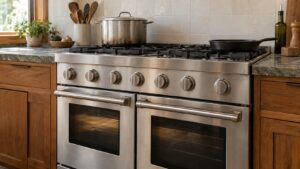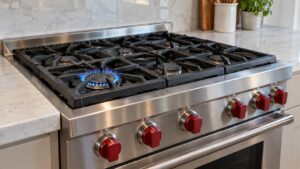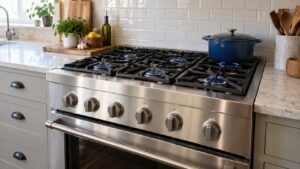
What Oven Won't Heat means (wolf oven won’t heat)
When a wolf oven won’t heat, the range oven powers up and accepts a mode but the cavity stays cold or far below the set temperature. On dual-fuel and induction ranges this usually points to a heating element, the RTD sensor, or a relay; on gas it points to a weak or failed oven igniter.
Symptoms to look for
The signs below help confirm you are dealing with this condition rather than a different problem on your Wolf range. You may see one of them or several together, and they can appear gradually or suddenly after a power event, a self-clean cycle, a spill, or recent service.
- The oven sets a mode but never reaches temperature
- Food cooks slowly or not at all
- You may see an RTD code (03/04) alongside the symptom
- A gas oven igniter glows weakly or not at all
Common causes
Several different problems can produce these symptoms. Working through the most likely causes in order separates a quick owner-level check from a problem that needs trained service and the correct Wolf parts.
- Failed heating element — the bake or broil element is open (electric ovens)
- Weak gas oven igniter — it glows but does not draw enough to open the gas valve
- RTD sensor failure — the control cannot read cavity temperature
- Relay or control failure — the element is never energized
Troubleshooting steps you can try
Work through these checks in order before calling for service. Stop wherever you are unsure, or where mains voltage, gas, a hot oven cavity, or a sealed component is involved, and hand the rest to a qualified technician.
- Confirm the correct mode and temperature are set and the oven is not in a delay/timed start.
- Look (electric) for a visibly broken or blistered element.
- Note any RTD code shown with the symptom (see 03/04).
- Because element, gas, and relay testing involve mains or gas, leave the diagnosis to service.
Parts a technician may replace
Depending on what the diagnosis shows, a technician may inspect, test, or replace the bake/broil element or gas igniter, rtd sensor, power relay, and control board. The correct part for your Wolf range is matched from the model and serial number, and genuine Wolf components are fitted through trusted parts suppliers rather than generic substitutes so that performance, safety, and the appliance’s long working life are all protected. Confirming the failed part before ordering avoids replacing more than the problem actually requires.
When to call a technician
An oven that will not heat needs a technician to test the element or igniter, the RTD sensor, and the power relay. When the fix calls for trained service, book a visit through our scheduling page and an experienced, qualified technician will diagnose and repair it.
Prevention and care
Regular care keeps this condition from returning on your Wolf range. Keep filters, vents, burner ports, igniters, seals, and the cooling-fan path clean, avoid blocking airflow, check that doors and knobs seat cleanly, and follow the Wolf use-and-care guidance for your model. Note when the symptom first appeared and what changed around the same time — a recent clean cycle, a spill into an igniter well, a power event, or recent service — because that detail often points a technician straight to the cause and keeps the repair simple. Where gas, a safety lockout, a stuck door lock, or continuous heating is involved, treat the condition as a reason to act quickly rather than wait, and shut off power or gas if anything seems unsafe.
Related help and Wolf resources
Browse other Wolf Range diagnostics, read about Wolf Range repair, look up your unit in the Wolf models reference, or the related 03 open RTD sensor, or schedule a service visit. For Wolf manufacturer documentation and model lookup, visit the manufacturer at subzero-wolf.com.