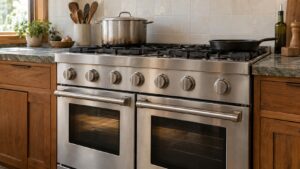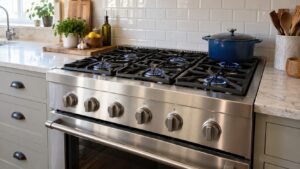
Whether a Wolf range is worth it depends on how you cook and on what your kitchen can support, not on the badge alone. A Wolf range is worth considering if you cook often, want dual-stacked sealed burners that go from a hard sear to a true low simmer, and have the ventilation and fuel supply a professional-style range needs. It is a poor fit if you want a low-maintenance appliance that never asks for attention. We are an independent repair company, so we cannot speak for the manufacturer, and we will not quote ratings or prices here; this guide covers what the range does and what ownership looks like from the service side.
Is a Wolf range worth it for the way you cook?
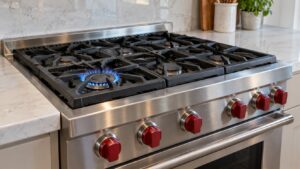
The honest answer starts with your habits. The burner design on Wolf gas ranges is the dual-stacked sealed burner: two tiers of flame ports in one sealed burner, so a single burner can run hot for searing and still hold a gentle simmer. If you sear, reduce sauces or melt delicate ingredients regularly, that design is the main reason to buy. If most of your cooking is boiling water and reheating, a professional-style range gives you far more capability than you will use, and the value is harder to see.
The oven is the other half of the decision. Dual fuel and induction models use an electric oven with Dual VertiCross convection, which moves heated air with two fans so several racks can cook at once. Our guide to Wolf Dual VertiCross convection explains what normal fan behavior sounds like. If you bake on several racks, that is a concrete benefit. If you mostly roast on one rack, it matters less.
Which Wolf platform makes a range worth it: gas, dual fuel or induction?
Most of the value question is really a platform question. The three platforms trade simplicity, oven precision and cooktop style differently, and no one of them is right for every home.
A GR all-gas range keeps everything on gas. Our Wolf gas vs dual fuel comparison describes it as the simpler install, because a gas oven has no electric oven element to supply. Do not read that as no electricity at all: a gas range still needs power for ignition and controls, so confirm the electrical requirements for your model in the installation instructions. A DF dual fuel range keeps the same gas burners but adds the electric oven, which brings real error codes and the multi-rack baking described above. An IR induction range swaps the gas burners for an induction cooktop; our Wolf IR induction range guide covers how it differs, including the touchscreen controls on Contemporary models. Our full Wolf range buying guide lines the three up side by side.
What does a Wolf range need from your kitchen?
A range like this is not a drop-in swap for a basic one. Plan for four things before you decide it is worth it.
First, fuel and electrical supply. Gas ranges need a gas line and a connection made by a qualified installer, and dual fuel and induction models need the electrical supply their ovens or cooktops call for. Your installer and the installation instructions give the exact requirements for the model you pick; do not guess them from a general guide. Our Wolf range installation page lists what to confirm first.
Second, ventilation. A powerful gas cooktop calls for a hood that can clear what it produces, and a powerful hood in a tight house can need a supply of replacement air. We explain the reasoning in our Wolf hood makeup air guide and the hood choice in our range hood buying guide. Budgeting for the hood and the install is part of the real cost of the range.
Third, space. The models on our site come in 30, 36, 48 and 60 inch widths, and the burner and griddle layouts differ by model, so measure the opening and read the model page before you commit.
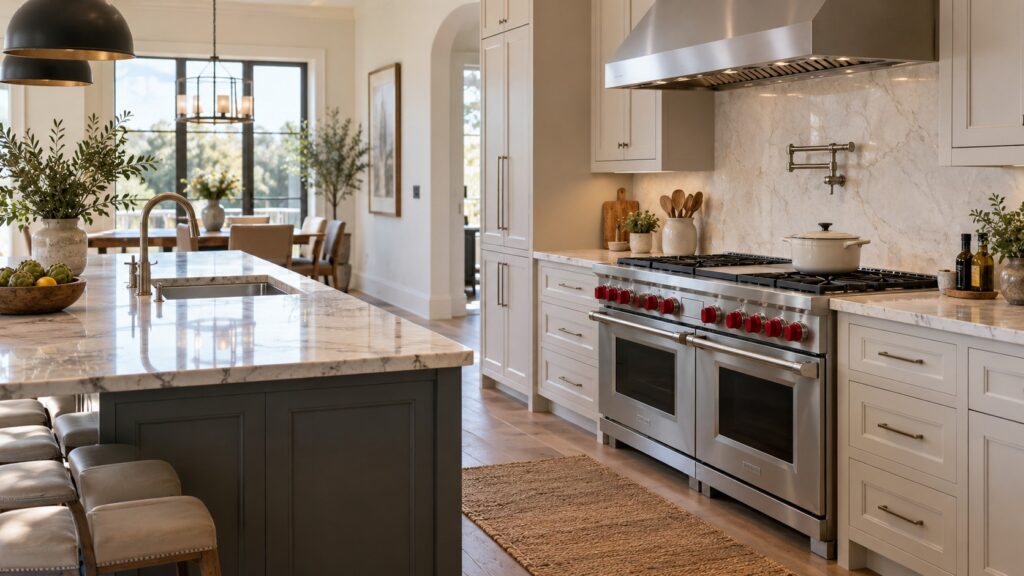
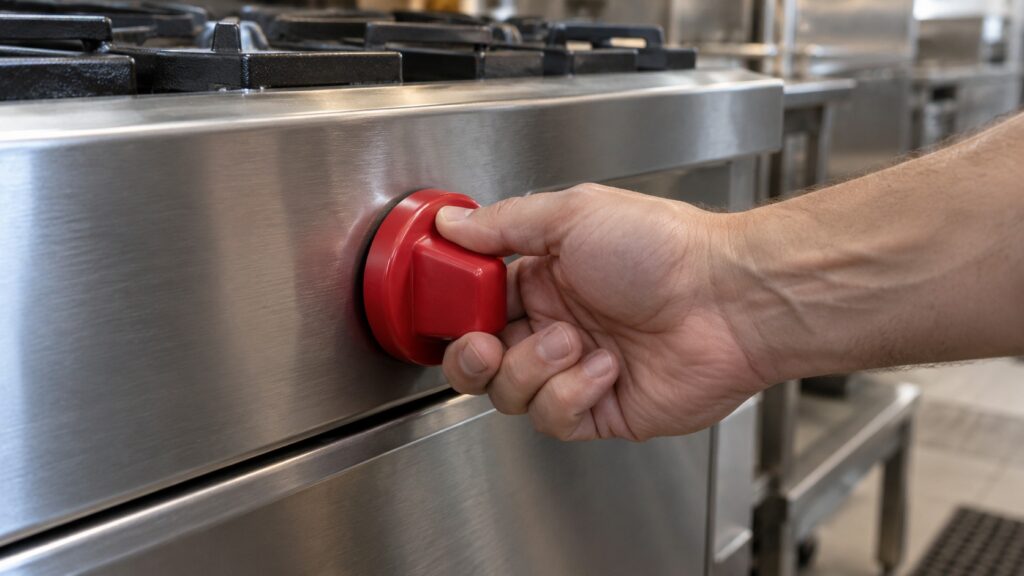
Fourth, the style. Professional-series ranges carry the red knobs the brand is known for, and Contemporary induction models drop the knobs for a touchscreen. Pick the look you will still like long after the purchase.
What does owning a Wolf range look like from the service side?
We see these ranges in service, so we can describe the pattern without promising anything. On our repair pages the failures that come up most are small, common parts on an otherwise sound range: igniters, oven temperature sensors, door locks, cooling fans and relays. Gas burners that click without lighting are often a moisture or port-cleaning matter rather than a defective burner. The more serious end is a failed control board on a very old range, which is where our repair-or-replace guide says replacement starts to be worth weighing.
Routine care keeps most of this away. Clear the burner ports, seat the caps, dry the igniter wells after wet cleaning and run self-clean only occasionally; our Wolf range maintenance guide gives the routine. A range that gets that attention is cheaper and easier to keep running than one that does not, and that is a fair part of the answer to whether it is worth it.
When is a Wolf range not worth it?
It is probably not the right purchase if you want an appliance with nothing to clean or adjust, if your kitchen cannot take the ventilation a gas cooktop needs, or if you plan to stay only a short time and would not use the capability. It is also a poor idea to buy on a single feature. Sealed burners keep spills on the surface, which makes wiping easy, but they still need their ports cleared. Induction is fast and easy to wipe, but it needs magnetic cookware.
Think about repair too. If a range you already own fails, the better question is often repair or replace rather than whether the brand was worth it; our Wolf range repair or replace guide gives a way to decide. A confirmed diagnosis from our Wolf range repair service tells you which side of that line your range is on.