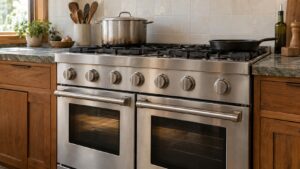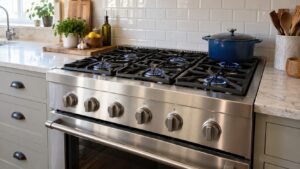
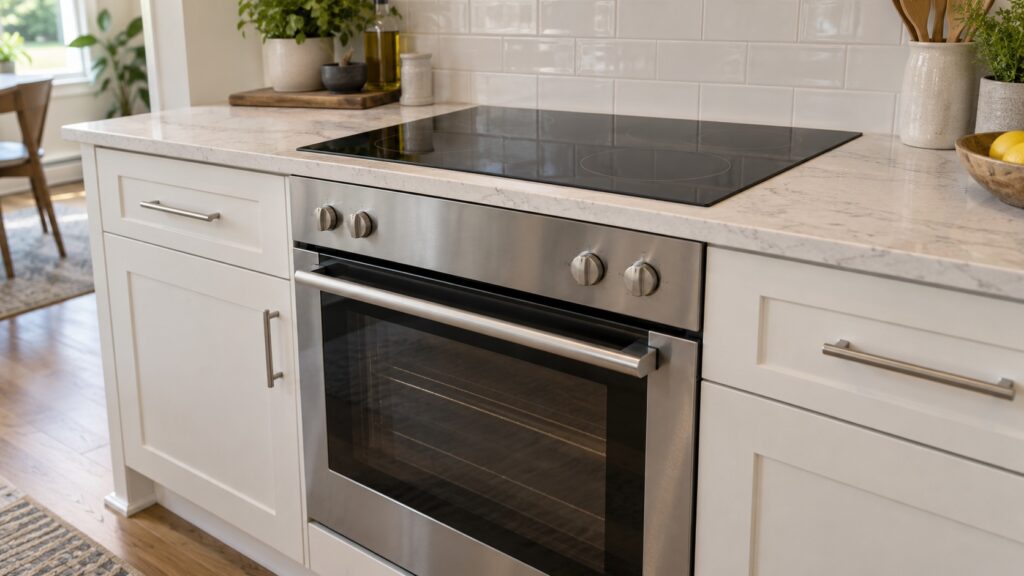
The Wolf IR30 vs IR36 induction range choice comes down to width and zone count, not to cooking quality. Both are Wolf IR induction ranges with an induction cooktop on top and a single oven below, so the 30-inch model is the right fit for most kitchens, while the 36-inch model earns its extra six inches when you regularly run several large pots at once and have the cabinet opening to spare.
What is the real difference between the Wolf IR30 and the IR36?
Width is the headline, and everything else follows from it. A 30-inch range is the size most American kitchens are built around, and the Wolf IR30 models are meant to drop into that opening. The 36-inch IR models are wider, which gives the cooktop more room between zones and gives the oven a larger interior on most designs. Our model pages list the IR30450 and IR30451 at 30 inches and the IR36550 and IR36551 at 36, so the number in the middle of the model code tells you the width before anything else does.
The cooking technology itself does not change with the width. Both sizes heat the pan directly with a magnetic field, both need induction-compatible cookware, and both rely on the same family of controls and sensors. If you want a plain-language walk through that technology, read our guide to how Wolf induction cooktops work before you compare sizes. Always confirm the exact zone layout and oven capacity for your specific model number in the owner’s manual, because Wolf adjusts details between production years.
How do the zones and cooktop space compare?
This is where the extra width pays off or does not. On a narrower cooktop the zones sit close together, so two large pans can crowd each other and a wide stockpot may overhang a neighbor. A wider cooktop gives you room for a large pot, a sauté pan and a small saucepan at once without playing Tetris. If your usual dinner is one main pan and one side, the narrower range will not hold you back. If you cook holiday meals with every zone running, the wider one is noticeably more comfortable.
Think about the pans you already own. Induction needs a magnetic base, and a pan that is too small for its zone may not be detected or may heat unevenly. Our Wolf induction cookware tips explain how to match pan size to zone, and that advice applies to both widths equally.
Which size fits the kitchen you actually have?
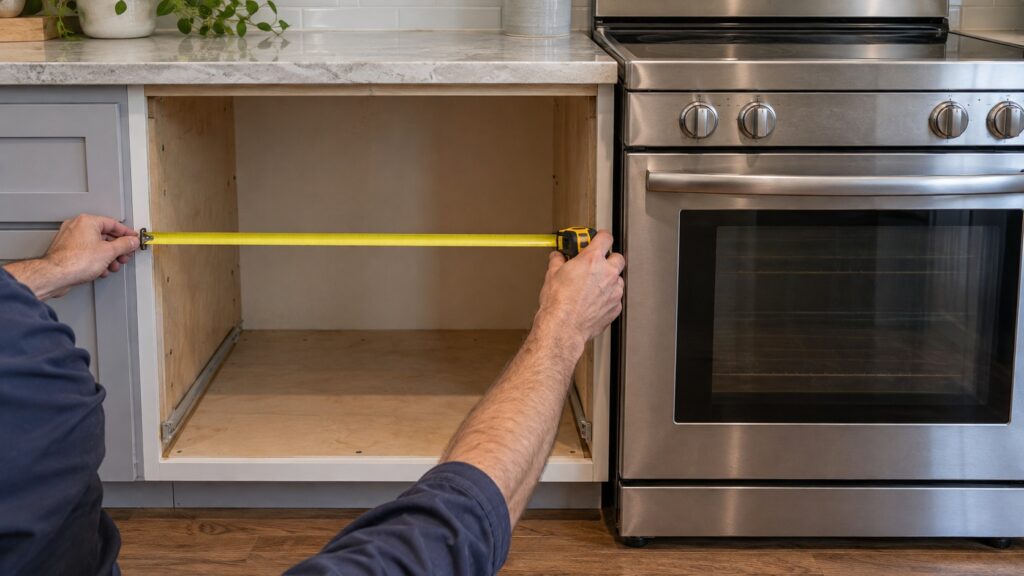
Measure before you fall for a floor-model finish. The cabinet opening is fixed, and a slide-in range that is too wide for it means cutting countertop, which is rarely a good plan for a stone surface. A 30-inch opening takes a 30-inch range. Moving to 36 inches usually means rebuilding cabinetry on one or both sides, adjusting the countertop and often changing the hood above, so the true cost of going wider is renovation work and not just the price of the range.
The hood matters as much as the range. A wider cooktop generally calls for a hood at least as wide as the cooking surface, so budget for that at the same time. Our Wolf range hood buying guide covers how to match the two.
What does each size need from your electrical service?
Induction ranges are electric appliances with a high combined load, and the oven and cooktop share a single feed. A wider range with more zones can draw more at peak, so check the rating plate for your model rather than assuming the two widths behave the same way. The details differ by model and by installation, which is why we cover them in a separate article on Wolf IR range electrical requirements. Your electrician should work from the manual for the exact model, and nothing here replaces that.
It is also worth checking that your panel has room for a dedicated circuit of the required size before you order. Finding out after delivery that the circuit needs upgrading is the single most common surprise with a first induction range, and it is easy to avoid with a call to your electrician before you buy.
Is the 36-inch worth the extra money?
Judge it by how you cook, not by the badge. The bigger range costs more to buy and more to install, so it needs to earn that back in daily use. It does if you entertain, batch cook, or run a family kitchen where more than one person cooks at a time. It does not if the extra zones would sit idle most of the year. A smaller range that fits cleanly is a better purchase than a larger one that forces compromises elsewhere in the room.
Longevity is the same on both sizes, and so is the support picture: parts, controls and sensors are shared across the line, and repair work is the same kind of work whichever width you own. If you are weighing a Wolf against a gas or dual-fuel alternative, our Wolf gas vs dual fuel comparison and the general Wolf range buying guide are good next reads.
What should you check before you order either one?
Confirm the full model number including the finish suffix, because S/P and S/T describe finish and handle style and affect which trim and replacement parts fit. Check that the delivery path is wide enough, that the floor is level and strong, and that the anti-tip hardware will be installed. Ask your installer how the range will be connected and where the junction box sits, since a box in the wrong spot can stop a slide-in range from sitting flush.
Finally, plan to run the range through its first use carefully. Read the sections of your manual on cookware, the cooktop lock and the oven’s first heat-up, and keep the model and serial numbers somewhere you can find them. If something misbehaves after installation, our Wolf range repair page explains how a visit works.