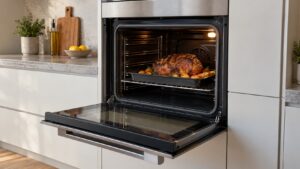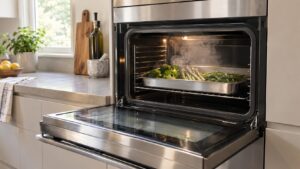
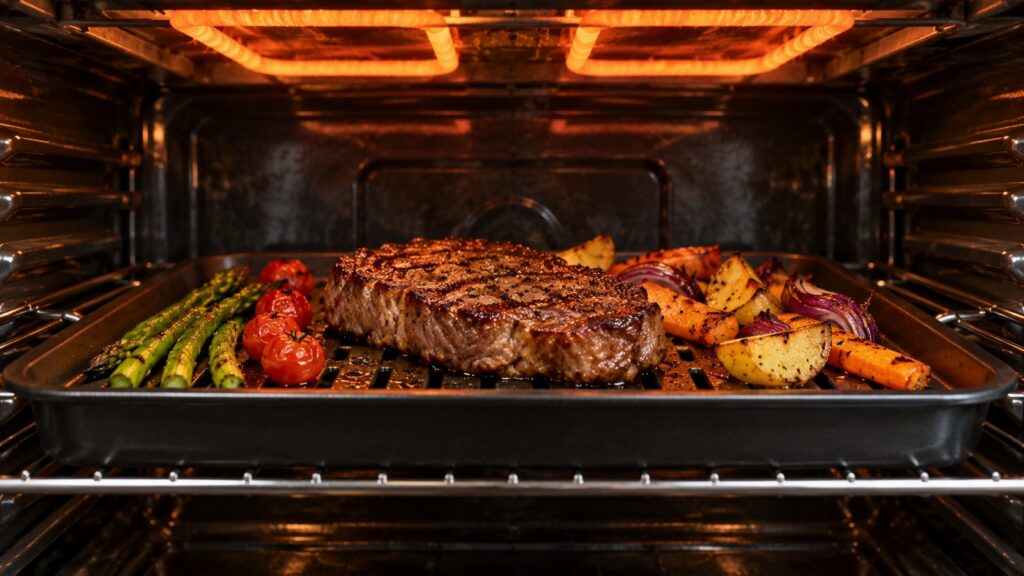
The best Wolf oven broiling tips are simple: preheat the broiler fully, put the rack at the right height for the thickness of the food, use the broil pan with its rack so fat drains away, keep the food dry on the surface, and stay close, because a broiler moves from golden to burnt in under a minute. Broiling is intense overhead heat, and a Wolf oven delivers it generously, so small habits make the difference between a good crust and a smoky kitchen.
How do you set up a Wolf oven for broiling?
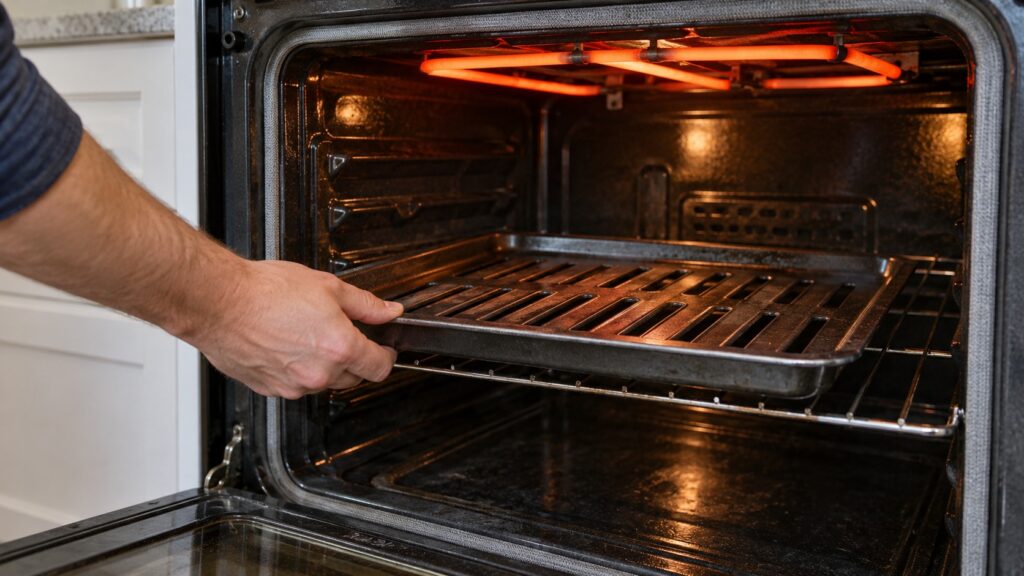
Start with an empty oven. Take out any pan you stored inside and remove racks you will not use, then place the rack where you want it before the oven heats, not after, because reaching over a glowing element is how burns happen. Slide the broil pan and its rack into place and let the broiler preheat. Wolf describes its broil function in the manual for each model, and the exact preheat time and the position of the element differ by model, so read the section for yours.
The element is above the food, so rack height controls how hard the heat hits. A higher rack puts the food closer and browns faster; a lower rack gives it more time to cook through. If you have ever had a steak that was charred outside and raw inside, the rack was almost certainly too high. Our general Wolf oven cooking tips cover bake settings, and this article is the broiling companion.
Which rack position works for which foods?
As a rule, thin foods that need only a quick blast go close to the element, and thick foods that need time to cook through go farther away. Sliced peppers, asparagus, open-faced sandwiches and thin fish fillets are all close-rack, short-time jobs. Thick steaks, chicken thighs and chops do better on a lower rack so the outside browns while the inside catches up. Use a thermometer to check the center, and rely on it rather than the color of the crust.
Because every oven broils a little differently, do a test run. Broil a slice of bread on each rack position for the same time and see how it browns, and you will learn how your own oven behaves in a way no chart can tell you. Write the result on the inside of a cabinet door and use it for months.
How do you keep broiling from filling the kitchen with smoke?
Smoke comes from fat hitting hot metal and burning, so the fix is to give fat somewhere to go. Use the broil pan with its slotted rack so drippings fall away from the element, and do not line the rack with foil that blocks the slots, since that traps grease against the food and turns the pan into a flame source. Trim heavy fat from steaks and chops, and pat the surface dry, which also helps browning because wet food steams before it sears.
Keep the pan clean. Old grease baked onto the pan or the bottom of the oven smokes the next time you broil, and it is a fire risk. Wipe up spills when the oven has cooled. If the kitchen does fill with smoke, turn the broiler off, keep the door shut to starve any flame, and ventilate. Our Wolf wall oven maintenance guide explains how to keep the cavity clean.
What temperature and timing should you expect?
Most broilers are a single high setting, and the timing depends on the food rather than a number you set. Treat broil times as short and variable: thin foods may take only a few minutes, and thicker foods longer with a flip in the middle. Flip once, season after the first side, and stay beside the oven. If your model offers a choice between a high and a low broil setting, use the lower one for thicker food that needs time and the higher one for a fast finish. Check the manual for what your model offers.
If you use a probe, our entry on the Wolf temperature probe explains how it works, and the Wolf gourmet mode glossary entry covers the preset cooking programs you may prefer for roasts. Broiling is best used for finishing and for thin cuts, while thick roasts belong to the bake and convection modes.
When does a broiler problem mean the oven needs service?
A broiler that does not glow, that glows only in part, or that cycles off before the food is done points to a problem with the element, a relay or a sensor. If the oven will not broil but bakes normally, the broil circuit is the suspect. If it will not heat at all, look at our guide on gas oven igniter failure for gas models. Broil faults are electrical or gas-side work behind panels, so we do not recommend chasing them yourself.
If you notice a strange smell, smoke with an empty oven, or an element that looks blistered or broken, turn the oven off at the breaker and call for service. Our Wolf oven door and hinge care guide also matters here, since a door that does not close fully can let heat escape and change how the broiler behaves.