
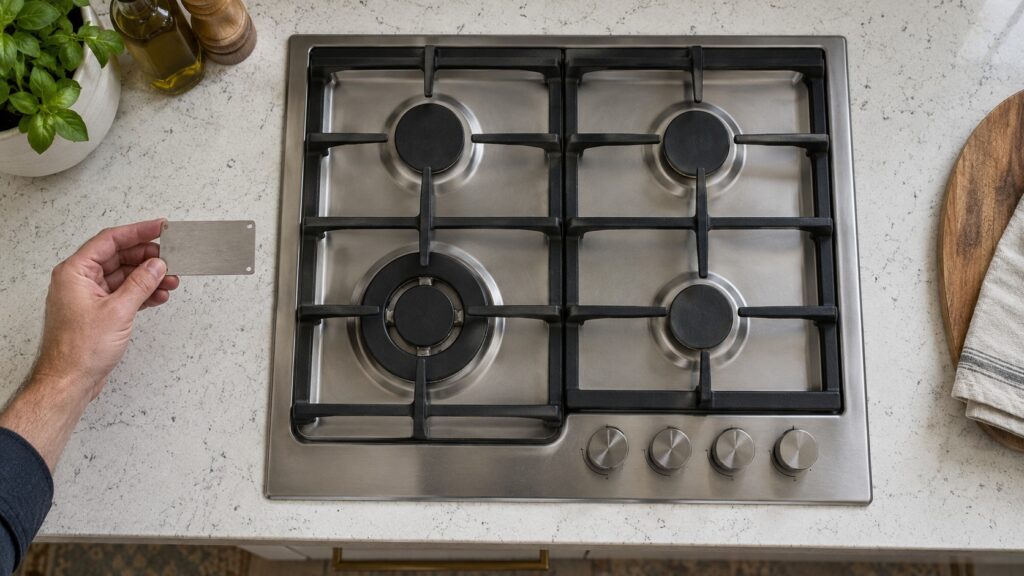
Wolf cooktop model numbers follow a pattern you can read once you know the order of the pieces: a letter pair for the cooktop type, a number for the width and burner count, a letter for the style, and a finish suffix after the slash. The short version is that CG means gas, CE means electric and CI means induction, the digits tell you the size, and the last letters tell you which trim and finish you own, so reading the number off the data plate tells you what the cooktop is before you order a part or book a visit.
What do CG, CE, CI and CT stand for on a Wolf cooktop?
The first two letters sort the cooktop by how it makes heat. On our model list, every gas cooktop starts with CG, every electric radiant cooktop with CE and every induction cooktop with CI, and the pattern holds across the 15, 24, 30 and 36 inch sizes. If you already know whether your cooktop has flames, glowing glass or a cool smooth surface, you already know which prefix to expect. If you are unsure, the prefix settles it: read it off the data plate and you have the fuel type in two characters.
CT is the odd one out because it names a family rather than a fuel. The CT models on the list are modular sections whose last letter before the slash carries the fuel: CT15E, CT15G and CT15I are the 15 inch electric, gas and induction sections, and CT30G and CT36E follow the same logic at larger widths. The wrinkle is that the CT name covers an older generation whose electronics differ from the newer CTE ribbon-control panels, so a CT number alone is not enough to order a part. Our notes on the Wolf CT cooktop E01 to E18 codes and the legacy CT induction codes show how different the two generations behave.
How do you read the digits in a Wolf cooktop model number?
The digits do two jobs at once. The first two are the width in inches, and on the burner-bearing models the third and fourth carry the zone or burner count. Read CG304 as a 30 inch gas cooktop with four burners, CG365 as a 36 inch gas cooktop with five, CG243 as a 24 inch with three and CG152 as a 15 inch with two. The same arithmetic works for the CE and CI families, so CI365 is a 36 inch induction cooktop with five zones and CE304 a 30 inch electric with four.
Some induction numbers run longer, such as CI30460, which appears alongside the CI304 models on our list. When you meet an unfamiliar number, do not guess at what the extra digits mean. Open the model page for that exact string, or read the owner’s manual, because a longer number can mean a different layout and a different set of replacement parts.
What do the style letters C, T, P and TF mean?
The letter after the digits names the design style, and Wolf offers its cooktops in three: Contemporary, Transitional and Professional. A C model has a clean, minimal look, a T model adds the transitional trim with a visible edge, and a P model carries the professional look with the heavier knobs and bezel that Wolf is known for. TF marks the framed variant of the transitional style, as in CG243TF and CI365TF. The style does not change what the cooktop cooks like, but it does change the knobs, the trim and the way the cooktop meets the countertop, which is why it matters when you order a replacement knob or a trim piece.
Treat the style letter as a parts filter. A knob for a Professional gas cooktop will not necessarily fit a Transitional one, even when the width and burner count match exactly, so match the whole string and not just the first half. If you are shopping rather than repairing, our Wolf cooktop buying guide explains how the styles and fuel types compare.
What does the part after the slash tell you?
The characters after the slash are the finish. S means stainless steel and B means black, so CG304P/S is the stainless professional gas cooktop and CE365C/B is the black contemporary electric. Some references print the slash and some drop it, which is why you will see CG304P/S, CG304PS and cg304p-s all pointing at the same cooktop. Online listings and search queries mix all three, so match the letters and not the punctuation.
Finish matters for ordering. Trim rings, bezels and glass can differ between a stainless and a black version of the same cooktop, and a part that fits one may not fit the other. If you are describing the cooktop to a technician or a parts counter, give the full number with the finish, and mention the width and fuel type in words as well, since it helps catch a misread character.
Where do you find the model number and what else should you write down?
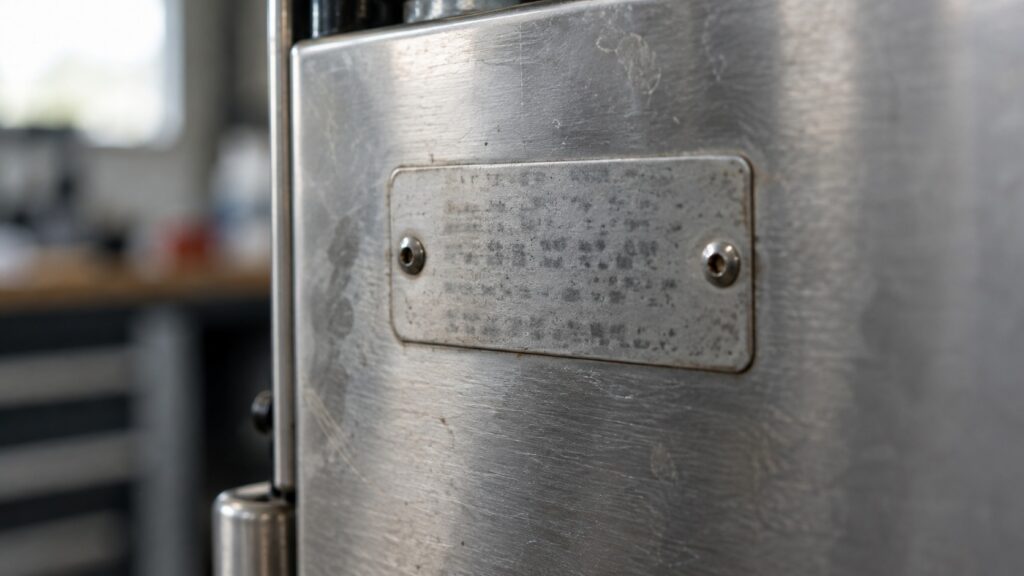
On a cooktop the data plate is usually on the underside or the edge of the unit, which can mean it is only readable with the cooktop lifted, so check your manual and your original paperwork first. The installer’s documents, the warranty card and the original receipt often carry the number too. Write down the model, the serial number and the date the cooktop was installed, and take a photo of the plate if you can see it safely. Do not lift or disconnect a cooktop to look for it, and never reach under a gas cooktop with the supply connected; if the plate is not visible, a technician can read it during a visit.
That information pays off later. It lets a technician bring the right ignition module, glass or control for the exact cooktop, and it is the first thing any service desk asks. For a gas cooktop, it also confirms whether you own the sealed burner layout described in our glossary entry on sealed versus open burners, and for an induction one it confirms which generation of controls you have. Our induction cooking glossary entry explains the terms you will meet on that display.