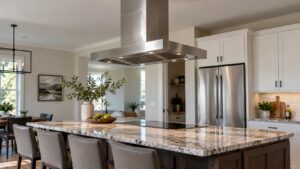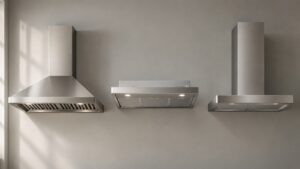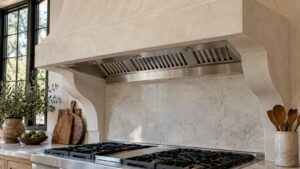
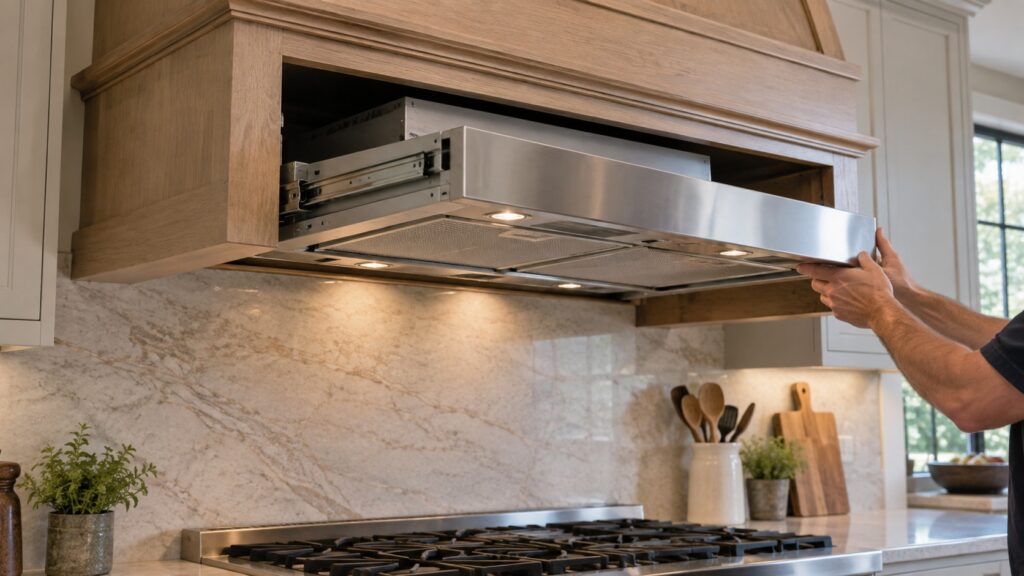
Some Wolf range hoods are not one piece of equipment but two: a custom wood, plaster or metal surround that a kitchen designer specified, and a DD-series insert liner mounted inside it that does all the actual work of moving air. When that liner starts failing, the question is not the usual “repair the hood or replace the hood” — it is wolf dd liner repair or replace, and the answer depends on whether the surround around it is worth keeping at all.
What makes a DD-series liner a different repair decision than a normal range hood?
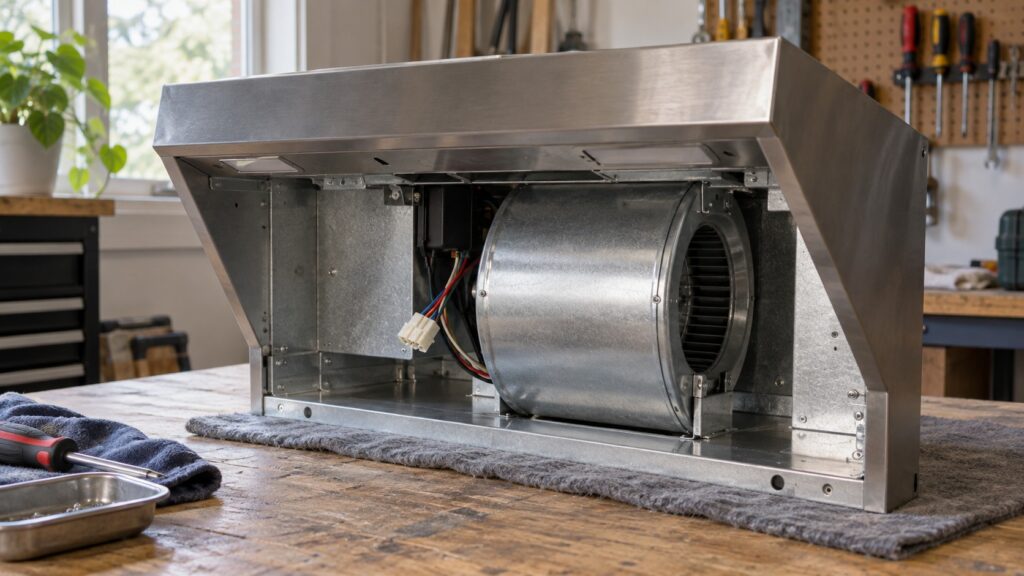
A standard canopy hood is one purchase and one disposal decision — the visible shell and the working parts are the same unit. A DD30, DD36 or DD45 insert liner is only the working half; the shell around it was very likely custom-built to match cabinetry, a plaster ceiling detail, or a specific kitchen design, and replacing that shell is a construction project, not an appliance swap. Wolf dd liner repair or replace decisions have to weigh the liner’s condition separately from the surround’s condition, because in most cases only one of the two actually needs attention.
When does repairing the liner in place make the most sense?
If the surround is in good shape and was expensive or difficult to build — a plastered ceiling recess, a stone-clad island canopy, custom millwork — keeping it and repairing or swapping only the liner inside it is close to always the right call. A failing blower motor, a burned-out light module, or baffle filters that have warped past cleaning are all liner-level parts that get serviced or replaced without touching the surround at all. This is the scenario the DD-series design exists for.
When does the liner itself need full replacement rather than a repair?
A liner with a cracked or corroded housing, a blower mount that has come loose from repeated vibration, or wiring that has failed at more than one point is past the stage where individual parts make sense to chase. If the liner is an older size or duct configuration that current replacement blowers no longer match cleanly, a full liner swap — while keeping the surround exactly as it is — is usually more reliable than patching a housing that is already compromised.
Does the surround ever need to be part of the decision?
Only rarely. If the surround itself has been damaged — water intrusion above a range, a cracked plaster recess, or duct routing that no longer meets code after a remodel — that is a separate construction problem from the liner’s mechanical condition, and it is worth having a contractor assess it before ordering any liner at all. In the far more common case, the surround outlives multiple liners over the life of the kitchen, which is the entire point of building the hood this way.
What does it actually cost to keep the surround and replace only the liner?
Pricing for liner-level work varies with which parts are involved — a blower motor swap starts from a modest diagnostic-plus-parts figure, while a full liner replacement behind an existing surround starts from a higher number that still comes in well under the cost of tearing out and rebuilding a custom surround from scratch. Either way, treat any number here as a starting point rather than a fixed quote, since the exact figure depends on the specific liner model, the parts available for it, and local labor. What stays consistent is the relative math: liner-only work is reliably the cheaper path whenever the surround itself is sound, which is the majority of cases we see.
The one factor that can shift this calculation is age. A liner that is many years old may be paired with a discontinued blower or control module, in which case sourcing exact replacement parts takes longer and can cost more than a straightforward swap would suggest. Even then, a full liner replacement — ordering a current DD-series unit sized to fit the existing surround opening — is still almost always less disruptive than rebuilding the surround itself.
How does this compare with a standard Wolf range hood that has no separate liner?
Our general Wolf range hood repair or replace guide covers the decision for canopy hoods where the visible shell and the mechanical parts are one unit — there, repair-versus-replace is a single decision about the whole hood. The DD-series insert changes that math by splitting the decision in two, which is worth knowing before assuming a hood problem means buying an entirely new hood.
How long does a typical DD-series liner last before this decision even comes up?
A liner that is cleaned and maintained on a normal schedule — baffle filters washed regularly, blower kept free of grease buildup — commonly runs for many years of daily kitchen use before a component failure forces the repair-or-replace question at all. Households that skip filter maintenance tend to see blower strain and premature motor wear show up earlier, which is one more reason routine care and this repair-versus-replace decision are connected rather than separate topics.
What should you check before calling for a quote?
Note the liner’s model number — DD30, DD36 or DD45 — from its own data plate rather than any label on the surround, since the surround was likely built by a separate contractor and carries no Wolf identification at all. Our Wolf range hood model codes guide covers how these liner and hood family codes are structured if the model tag is unclear. Photograph the visible symptom — weak airflow, a dead light, unusual noise — since that, combined with the model number, is what determines whether the fix is a part swap or a full liner replacement.
We are an independent repair service, not a factory-authorized channel, and we will tell you honestly when a liner has reached the point where replacement costs less than continued repair. Wolf range hood repair covers both liner repair and full liner replacement behind an existing surround, and you can schedule a visit with the liner’s model number ready.