
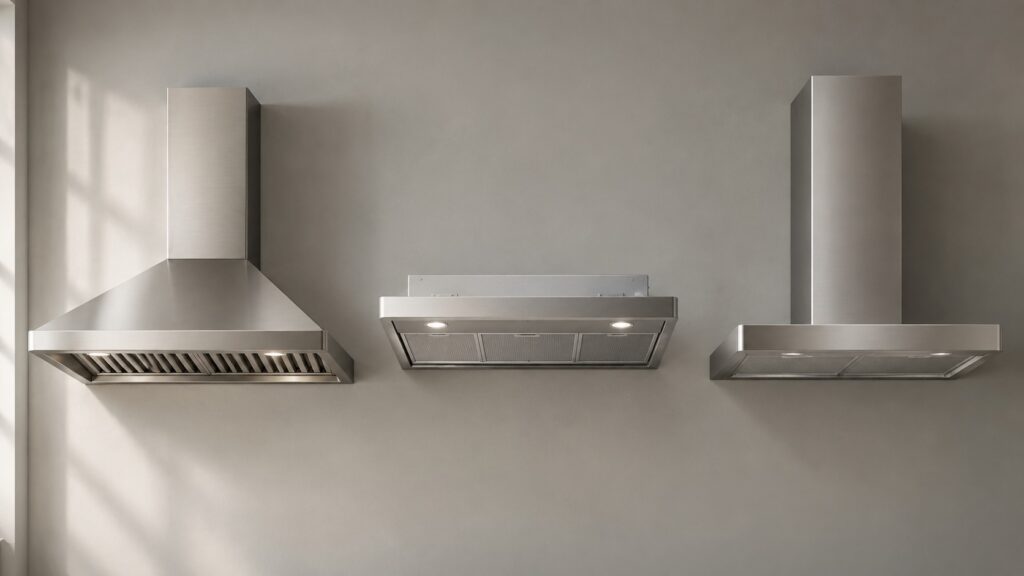
Wolf range hood model numbers look cryptic until you notice they follow a fixed pattern: a two-letter prefix that tells you the hood’s shape and mounting, followed by a width and a finish code. Once you know what VC, VI, VW and PW stand for, a model tag like VC48W or PW482418 stops being a string of characters and starts telling you exactly what kind of hood is bolted above the range. Wolf range hood model codes matter most when you are matching a replacement part, a liner, or a blower to the exact hood already installed, because the wrong prefix means the wrong hardware.
What do the letters in a Wolf range hood model number actually mean?
The first one or two letters set the hood’s physical form and where it mounts, and that single choice decides which parts, which liners, and which duct kits will ever fit it. Wolf range hood model codes are not marketing shorthand; they map directly to the mounting hardware in the box. A VC-series canopy and a VW-series canopy look similar in a photo, but a VC hangs and vents from above an island with no wall behind it, while a VW anchors to a wall and routes ductwork through that wall or the ceiling directly behind it. Ordering a part by width alone, without checking the prefix, is the single most common mismatch we see.
Why does Wolf split its hoods into canopy, insert and Pro Wall families?
A canopy hood (VC or VW) is a complete, finished unit — the blower, the lights, the baffle filters and the visible shell all arrive as one piece designed to be the room’s focal point. An insert (VI) is the opposite: it is only the working guts of a hood — blower, baffles, controls — meant to disappear inside a kitchen designer’s own custom wood or plaster surround, so the visible exterior is never Wolf’s at all. The Pro Wall (PW) sits between the two: it looks like a standard wall canopy but is engineered for the airflow that a 48-inch or 60-inch Pro range actually produces, which a residential VW model is not rated to move.
How do the width and finish codes attach to the prefix?
After the two-letter family code comes the width in inches, and after that a letter or short string for the finish and duct routing — a stainless canopy with a glass front reads differently from an all-glass front in black or white. The models in Wolf’s current lineup, from VW30B up through VC48W and the Pro Wall PW602718, follow this same order every time: family, width, finish. Reading a tag this way turns a confusing string into three separate, checkable facts.
Where does an insert liner like PL462212 fit into this naming scheme?
The PL-prefixed liners are a different category from the VC/VI/VW/PW hoods above — they are replaceable blower liners sized to drop inside a wall or island canopy hood that a customer already owns, rather than a complete hood in their own right. Our Wolf hood liner buying guide compares the two current liner sizes directly. The short version: a VC or VW canopy is the visible shell, and a PL liner is the mechanical core that can sometimes be swapped inside it without replacing the whole hood.
What do the duct-exit and control codes at the end of a model number cover?
Beyond family, width and shell finish, a handful of current Wolf range hood model codes carry a further character for duct orientation or control style — a top-exit canopy reads differently on the data plate from a rear-exit version of the same width, even though both share the same family prefix and width digits. This extra character rarely changes which parts a technician orders, but it matters at the planning stage: a top-exit hood assumes ductwork running straight up through a soffit or ceiling cavity, while a rear-exit hood assumes a run through the wall behind it, and swapping one for the other after cabinetry and ductwork are finished is far more disruptive than choosing correctly the first time. If a remodel is replacing an existing hood with a newer model in the same family, checking this detail against the existing duct run avoids discovering a mismatch after delivery.
It is also worth knowing that Wolf’s model-code structure for hoods has stayed consistent across generations even as individual widths and finishes have been added or discontinued — a fact that helps when researching a hood that is older than the current catalog. The family letter and the general position of width and finish within the string have not changed, so an older VW-series tag can be read with the same logic laid out above, even if that specific width is no longer sold new.
Does the mounting family change how a Wolf range hood is maintained?
The baffle filters, the blower motor, and the light assembly are serviced the same way regardless of family — pulling and washing baffle filters, checking duct static pressure, and cleaning the blower wheel apply equally to a VC island canopy and a PW Pro Wall model. Our Wolf range hood maintenance guide covers that routine care in full. Where the family does matter is access: an insert hidden inside custom cabinetry is harder to reach for filter changes than an exposed canopy, and that is worth planning for at installation, not after the first filter reminder lights up.
What should you have ready before calling for service on any of these hoods?
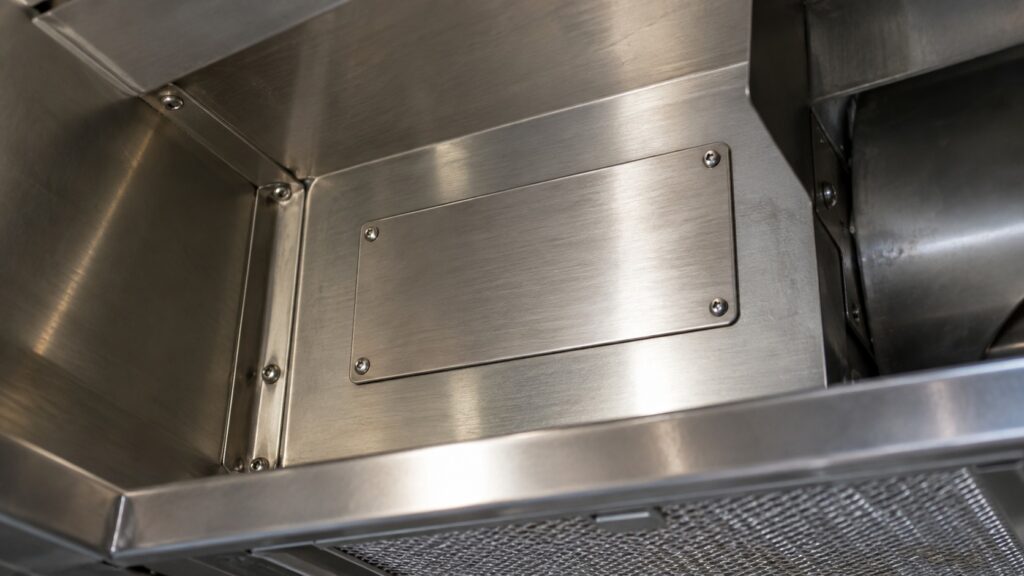
The full model number from the interior data plate — family prefix, width, and finish code together — tells a technician the exact blower, filter set, and duct transition to bring on the first visit rather than the second. Photograph the plate before calling if it is in a hard-to-reach spot, since it is usually mounted on the inside of the hood body near the blower housing. Our Wolf range hood installation guide shows where that plate typically sits on each hood family if you need to track it down.
We are an independent repair company, not a factory-authorized channel, and we work on the full range of Wolf hood families — canopy, insert and Pro Wall alike. If a hood is showing weak suction, a dead blower, or a filter that never seems to clear, Wolf range hood repair covers diagnosis for any of the prefixes above, and you can schedule a visit once you have the model tag in hand.