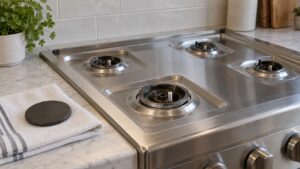
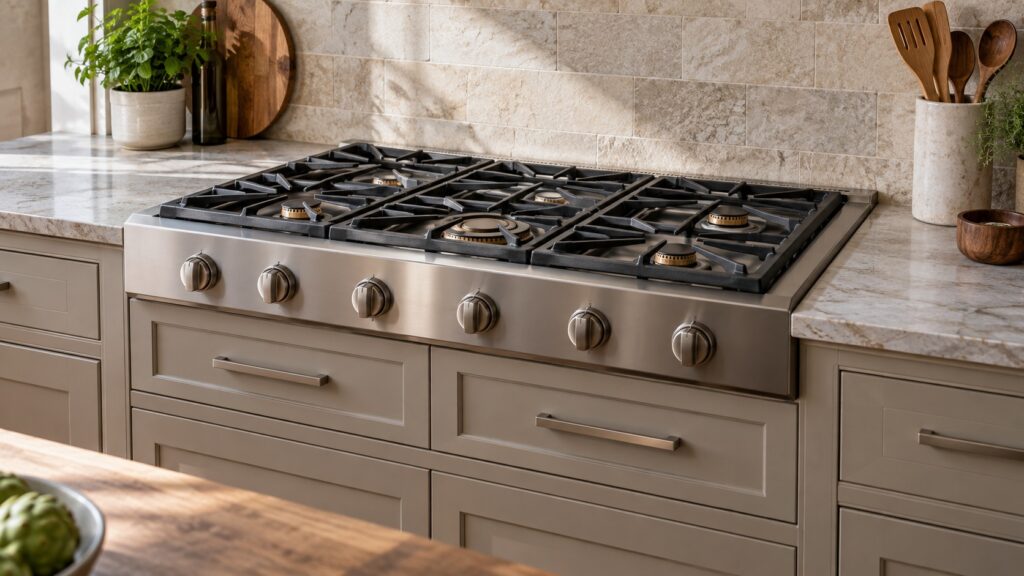
A rangetop is a professional cooking surface with no oven beneath it, dropped into a counter and fed by a gas or electrical supply below. Working through a wolf rangetop buying guide honestly means answering four questions before you look at a single model: what width the kitchen can take, what fuel you have, what modules you actually want, and what the hood above it must do.
Rangetop or range
The real question is what you want under the counter. A rangetop frees that space for drawers or a cabinet, and it lets you put wall ovens somewhere that suits how you cook — at eye level, away from the cooking surface, so two people are not working in the same square yard.
A range is one appliance, one installation and one cutout, and it is usually the better answer where space or budget is tight. Our range buying guide covers that side, and the rangetop glossary entry covers the terminology.
Two things to check before committing to the rangetop path: you now need wall ovens somewhere, which is a second appliance and a second installation, and you need the cabinet below to be usable, which depends on the appliance’s depth requirement.
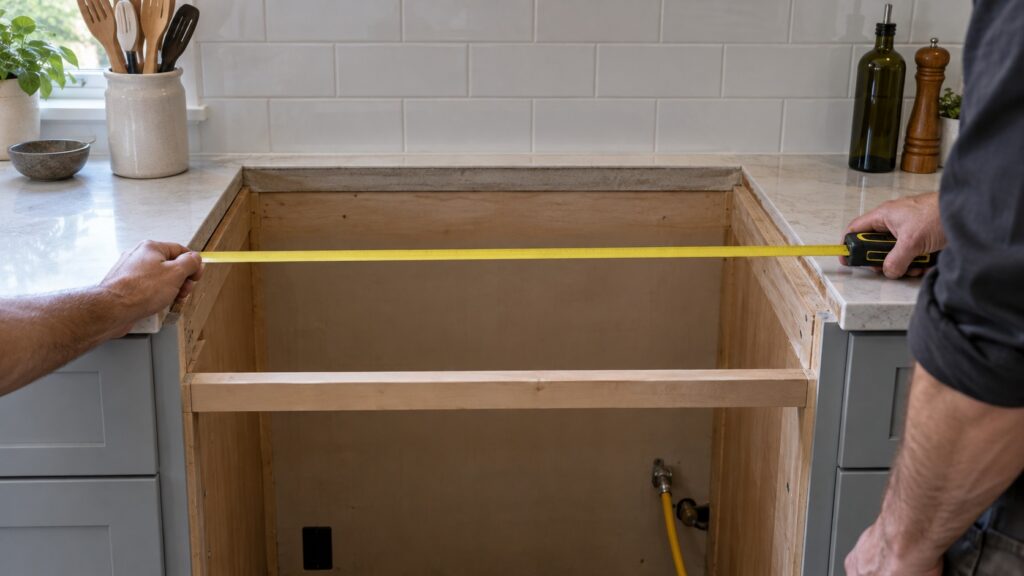
Width decides most of the specification
Wider gives you more burners or room for a module, and it sets the hood width, the cutout and the cabinet run. It is the first decision because everything downstream depends on it.
Measure the opening you actually have, not the appliance you want, and remember the hood above has to be at least as wide as the cooking surface — preferably wider on a professional surface where burners run close to the edges. A hood narrower than the appliance will always miss what happens at the sides.
Fuel, and the question people answer too late
Gas rangetops need a supply and a shutoff valve within reach. Induction needs a substantial dedicated circuit, and the required breaker size is on the rating plate rather than assumed from what served the previous appliance.
If the property runs on propane rather than natural gas, the appliance needs the correct conversion kit fitted — running it unconverted is unsafe and produces yellow, sooty flames. This is regularly discovered after installation. Our gas against dual fuel guide covers the fuel decision where an oven is involved, and much of it applies here.
Induction is worth considering seriously on a rangetop. It is faster than gas to a boil, controllable to a genuine low, far easier to clean, and it puts much less waste heat into the room. It demands magnetic cookware, which is the only real constraint. Our induction guide covers the mechanism.
Burners, and reading the numbers honestly
Maximum output is the headline and it is the less useful half. A burner that reaches a very high output and cannot hold a gentle simmer is a burner you will fight with every day, because most cooking is not at maximum.
The dual stacked arrangement addresses exactly this, with two rings of flame at different levels so one burner covers both ends of the range. Our dual stacked burner guide covers how it works.
Also look at how burners are distributed. Two very high output burners at the front and two modest ones at the back is a different appliance from four identical ones, and it suits a different kind of cook.
Modules: what each is actually for
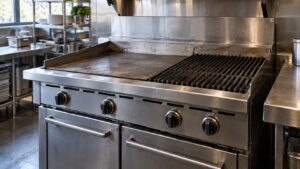
- Griddle — flat plate for contact cooking. Excellent for breakfast, burgers and anything you would otherwise do in a pan, and it takes the place of two burners.
- Charbroiler — grates over radiant heat for marks and char. Genuinely different results, and a serious ventilation load.
- French top — a solid plate with a hot center and cooler edges, for holding many pans at different temperatures. Our French top guide covers whether it suits you.
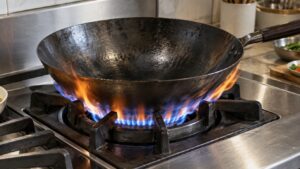
- Wok burner — a high output burner with a supporting ring, for genuine wok cooking. Our wok burner guide covers it.
Be honest about frequency. A module you will use twice a year has cost you two burners you would have used weekly, and that trade is felt every dinner rather than at Christmas.
The hood, budgeted at the same time
A professional cooking surface needs serious ventilation, and that is not a decision to leave until after the appliance is chosen. The hood has to be wide enough, mounted at the specified height, ducted properly in rigid metal, and — above a code threshold of airflow — supplied with makeup air.
That last point catches people out and it is expensive to retrofit. Our makeup air guide covers why a powerful hood in a sealed house does not work without it, and the hood buying guide covers matching the two.
Installation requirements worth confirming early
Cutout dimensions come from the model’s template, not from the nominal width. Clearance to side walls and combustible surfaces is specified and is not a suggestion. The cabinet below needs the depth the appliance requires, which affects what drawers are possible. And service access matters: an appliance sealed in with no removal path makes every future visit harder.
Our rangetop installation guide covers what the opening and the services have to provide.
When to call
Call when a cutout needs work, when a gas connection or fuel conversion is required, when an induction circuit does not match the rating plate, or when burners or modules do not perform correctly from the first day.
We are an independent repair company and not a factory service arm. Pricing starts from a diagnostic visit and we confirm the estimate before any work begins. Wolf rangetop repair covers burners, igniters, valves, modules and controls, and you can schedule a visit online.