
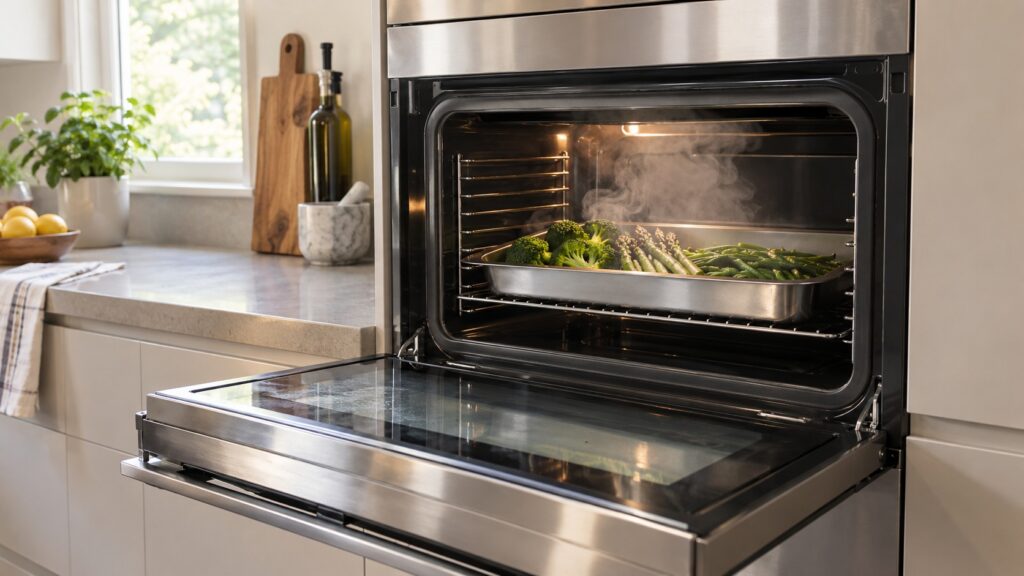
The best Wolf steam oven cooking tips are about matching the mode to the food, keeping the door shut while steam builds, using the right pans, and caring for the oven afterward so it keeps making steam reliably. A Wolf CSO is a convection steam oven, so it can cook with steam alone, with steam and convection together, or with convection alone. Steam keeps vegetables bright, fish tender and leftovers moist; convection steam gives you a crisp crust on bread and a juicy roast; and plain convection handles anything that needs a dry, browned finish. Always confirm the temperatures and times for each mode in your owner’s manual, because they differ between models.
Which mode should you use for which food?
Start by deciding what you want the surface to do. If you want food to stay tender and keep its color, use steam alone: broccoli, green beans, salmon and eggs come out the way they should in a gently steamy cavity, and nothing dries out. If you want a crisp exterior with a moist interior, choose the combination mode, which adds convection heat so the surface can brown while the inside stays juicy. If you want something dry and browned, use convection with no added steam.
Leftovers deserve a special mention. A plate of rice, pasta or roasted vegetables reheated in steam comes back close to fresh, where a microwave would turn it rubbery. Cover nothing tightly, and use a perforated or shallow dish so the steam can reach the food. If you want a plain-language walkthrough of what the oven does behind the scenes, read our guide to how a Wolf CSO generates steam.
Why should you keep the door closed?
The cavity needs time to fill with steam, and every time you open the door, the steam escapes and the temperature drops. Resist the urge to check early. Set a timer, trust the oven, and open the door only when it is time or when your recipe tells you to turn or baste something. This matters most when you are baking bread, because the early burst of steam is what gives the loaf its crust and rise.
When you do open the door, do it slowly and stand back. A cloud of hot steam comes out, and it can scald hands and face. Open it a little, pause for a second, then open fully, and always use oven mitts for the pans and the door handle if it is warm.
What pans and cookware work best?
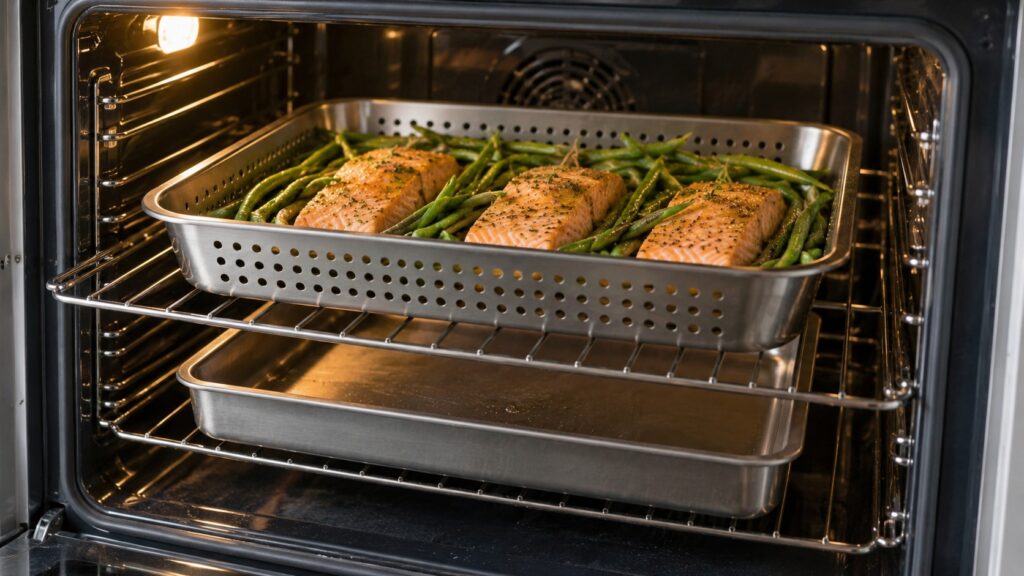
Choose cookware that lets steam circulate. Perforated stainless pans suit vegetables and fish because steam passes through the holes and cooks from all sides, with a solid pan on the rack below to catch drips. For roasting and baking, shallow pans work better than deep ones, because steam and hot air need to reach the surface of the food. Light-colored pans brown more gently than dark ones, which can scorch the bottom of a crust.
Avoid wrapping everything in foil, which blocks the steam you are paying for, and avoid cookware that cannot take heat and moisture, such as some plastics. If you use a temperature probe, plug it in as your manual directs and read our Wolf temperature probe glossary entry for what it measures.
How do you adjust recipes and timing?
Recipes written for a conventional oven cook differently in steam. Food heats faster because steam transfers heat more efficiently than dry air, so check ten to fifteen minutes before the recipe says it should be done, and write down what worked. Roasts and poultry often finish sooner and stay juicier, and root vegetables may need a little more time than you expect if the pieces are large.
For anything that depends on exact timing, such as delicate fish, start with the shorter end of the range and add time in small steps. A probe takes the guesswork out of poultry and roasts. For a general reference on everyday oven technique that also applies to this oven, see our Wolf oven cooking tips.
What should you do after you cook?
Treat the oven like a steam appliance, because that is what it is. When the cavity has cooled enough to touch, wipe the condensation from the door, the sides and the floor with a soft cloth, and leave the door slightly open for a short while so the cavity can dry. Standing moisture is the enemy of seals and of odor-free cooking.
Water quality matters over the long term. Minerals in hard water leave scale on the steam-making parts, and scale is behind many steam faults. Follow your manual’s guidance on water type and run the descaling routine when the oven asks for it, using the steps in our Wolf CSO steam descaling guide. If the oven shows a steam-related fault, our guide to Wolf CSO steam oven E29 and F9 explains what to do next.
What if the oven stops steaming properly?
Weak steam, water in the cavity that does not go away, or a message on the display all deserve attention before they turn into a bigger repair. Write down exactly what the display says and when it appears. Our Wolf CSO sensor and probe codes guide covers the sensor family, and our Wolf oven repair page explains how a visit works.