A wok burner looks like just another ring on a Wolf rangetop, but it is tuned for a completely different cooking motion than the sealed burners next to it, and using it like a standard burner wastes most of what it is built for. Wolf wok ring placement tips come down to three things: the shape of the pan you set on it, which part of the ring you actually use, and how you read the flame once food is moving in the pan.
Why does pan shape matter more on a wok burner than on any other ring?
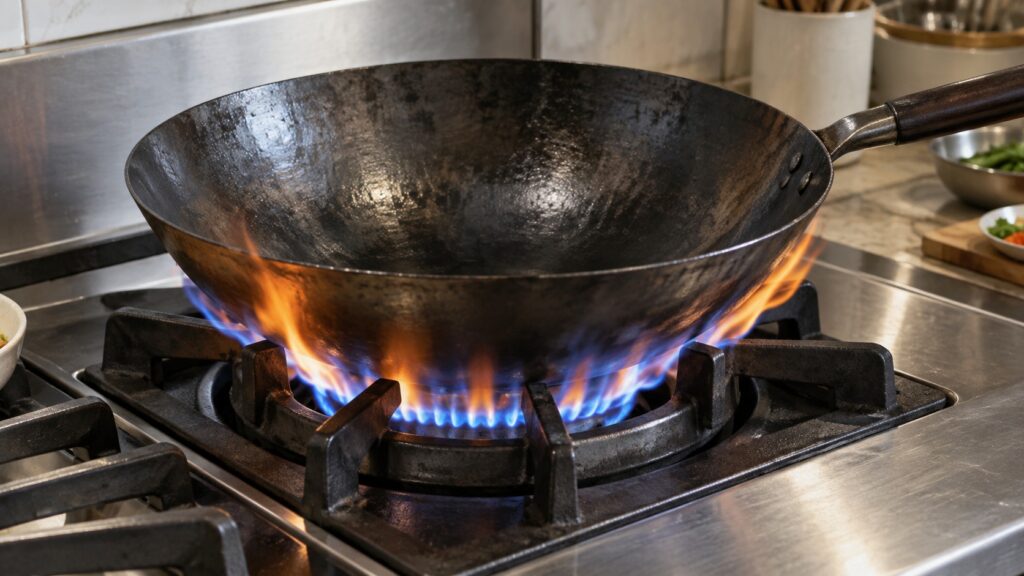
A sealed burner is designed around flat contact between pan and grate; a wok burner is designed around a round-bottomed pan seated inside a support ring so the flame wraps up the pan’s curved sides rather than concentrating on one flat spot. Set a flat-bottomed skillet on it and most of the flame’s output escapes past the pan’s edges instead of heating it — you lose the entire advantage the burner is built for. A proper round-bottomed wok, seated low in the ring, is what makes wolf wok ring placement tips worth following at all.
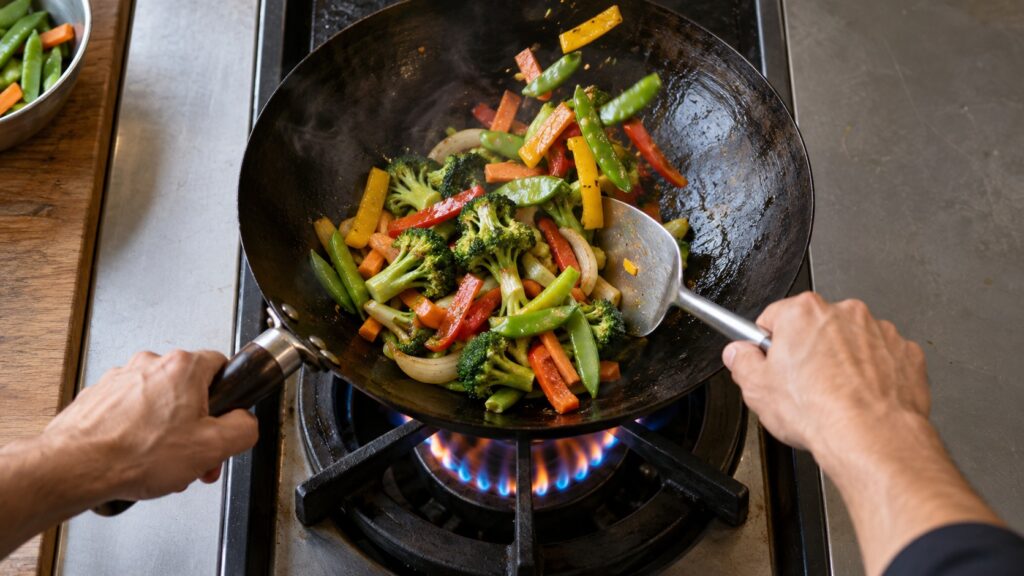
Which part of the flame should food actually sit over?
For a hard sear — the high-heat stir-fry motion a wok burner exists for — keep the pan seated low, close to the innermost flame ports, and keep food moving so no single spot scorches before the rest catches up. That combination is what produces real wok hei, the light char and aroma that separates a properly seared stir-fry from one just cooked through. Lifting the pan away from the flame, or letting food sit still in the center too long, undoes both halves of that technique at once.
How should you cook something that needs a lower, gentler heat instead?
Not every dish that goes into a wok needs blast-furnace heat. For simmering a sauce or steaming vegetables in the same pan, dial back to the outer flame ports rather than the center, and if the round bottom sits too close to a lower flame, a wok ring accessory raises the pan slightly to spread heat more evenly. The burner is not an all-or-nothing tool — reading which flame zone you actually need is most of the skill.
What should be running in the kitchen before the pan gets hot?
A wok burner at full output produces noticeably more heat, smoke and steam than a sealed burner at a comparable setting, simply because the technique it is built for calls for exactly that. Start the range hood on a high setting before oil goes in the pan, not after smoke has already filled the kitchen — our Wolf range hood vent setup guide covers getting hood airflow matched to high-heat cooking like this in more detail.
What is the most common mistake people make the first time they use it?
The single most common misstep is treating the wok burner like the strongest sealed burner on the rangetop and cooking on it the same way — filling a flat pan, setting a moderate flame, and walking away to let it heat gradually. That approach wastes the ring geometry and the high peak output the burner is built for, and it often produces uneven results that get blamed on the burner rather than the technique. The second most common mistake is the opposite problem: cranking the burner to maximum for a dish that never needed that much heat, which scorches oil and aromatics before the rest of the ingredients have had a chance to cook through.
Getting comfortable with a wok burner usually takes a few sessions of paying attention to how quickly a thin layer of oil starts to shimmer at different flame settings, rather than following a fixed heat number from a recipe written for a different type of stove entirely. Once that feel is there, the burner becomes noticeably more predictable to cook on than it seemed the first time it was lit.
Does the wok burner need anything different in terms of everyday care?
The ring and its flame ports collect more oil splatter than a flat sealed burner simply because of how stir-fry cooking moves food and oil around inside a curved pan. Wiping the ring and support down after each use, rather than letting oil bake onto it over several sessions, keeps the ports from clogging and the flame even across all of them. Our general Wolf rangetop tips guide covers broader day-to-day care across all the burner types on a Wolf rangetop.
Does the size of the wok itself matter as much as its shape?
A wok that is too large for the ring will overhang the flame ports significantly, cooling unevenly at the rim while the center runs hot, which produces the same uneven results as using the wrong pan shape entirely. A wok sized close to the ring’s own diameter keeps the curved sides within reach of the flame across most of the pan, which is where the technique described above actually works as intended.
How does understanding the burner’s design change what you cook on it?
Once the shape and flame-zone logic click, a wok burner becomes the burner of choice for anything that benefits from fast, uneven heat and constant motion — stir-fries, quick sears, flash-cooked greens — and the burner to skip for anything that wants slow, even heat across a flat surface. Our how the Wolf wok burner works guide covers the mechanical side of why the ring is shaped the way it is, which is useful background for getting more consistent results with the tips here.
If a wok burner is not lighting evenly across all its ports, or the flame pattern looks uneven even after cleaning, that is usually a burner issue worth having looked at rather than a technique problem. We are an independent repair service, not a factory-authorized channel; Wolf rangetop repair covers burner diagnosis, and you can schedule a visit if cleaning does not restore an even flame.