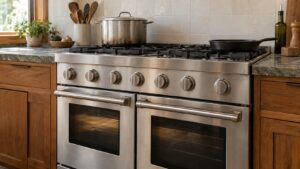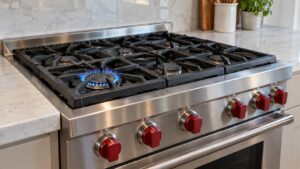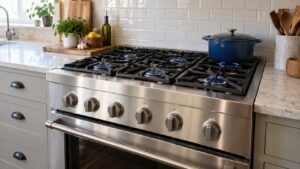
What Gas Burner Won't Ignite means (wolf gas burner won’t ignite)
When a wolf gas burner won’t ignite, the surface burner on a gas (GR) range fails to light even though gas and spark should be present. The most common, easily fixed cause is moisture in the igniter well after cleaning or a spill — Wolf advises a 24 to 48 hour dry-out — followed by clogged ports or a mis-seated burner cap.
Symptoms to look for
The signs below help confirm you are dealing with this condition rather than a different problem on your Wolf range. You may see one of them or several together, and they can appear gradually or suddenly after a power event, a self-clean cycle, a spill, or recent service.
- The burner clicks but never lights
- One burner is dead while the others light normally
- You smell a little gas but get no flame
- The burner lit fine before a recent spill or cleaning
Common causes
Several different problems can produce these symptoms. Working through the most likely causes in order separates a quick owner-level check from a problem that needs trained service and the correct Wolf parts.
- Moisture in the igniter well — water from cleaning or a boil-over needs 24 to 48 hours to dry
- Clogged burner ports — food debris blocks the flame openings
- Mis-seated burner cap — the cap is not centered on the base
- Igniter or spark module failure — weak or no spark at the electrode
Troubleshooting steps you can try
Work through these checks in order before calling for service. Stop wherever you are unsure, or where mains voltage, gas, a hot oven cavity, or a sealed component is involved, and hand the rest to a qualified technician.
- Turn the burner off and let any moisture in the igniter area dry for 24 to 48 hours.
- Lift off the burner cap and head and clear the ports with a pin, then reseat them squarely.
- Check that other burners spark — if all are dead, suspect the shared spark module or power.
- If a single burner still will not light when dry and clean, leave it for service.
Parts a technician may replace
Depending on what the diagnosis shows, a technician may inspect, test, or replace the spark igniter, burner cap and ports, spark module, gas valve, and ignition switch. The correct part for your Wolf range is matched from the model and serial number, and genuine Wolf components are fitted through trusted parts suppliers rather than generic substitutes so that performance, safety, and the appliance’s long working life are all protected. Confirming the failed part before ordering avoids replacing more than the problem actually requires.
When to call a technician
A burner that will not light when dry, clean, and correctly seated needs a technician to test the igniter, switch, spark module, and gas valve. When the fix calls for trained service, book a visit through our scheduling page and an experienced, qualified technician will diagnose and repair it.
Prevention and care
Regular care keeps this condition from returning on your Wolf range. Keep filters, vents, burner ports, igniters, seals, and the cooling-fan path clean, avoid blocking airflow, check that doors and knobs seat cleanly, and follow the Wolf use-and-care guidance for your model. Note when the symptom first appeared and what changed around the same time — a recent clean cycle, a spill into an igniter well, a power event, or recent service — because that detail often points a technician straight to the cause and keeps the repair simple.
Related help and Wolf resources
Browse other Wolf Range diagnostics, read about Wolf Range repair, look up your unit in the Wolf models reference, or the related continuous clicking, or schedule a service visit. For Wolf manufacturer documentation and model lookup, visit the manufacturer at subzero-wolf.com.