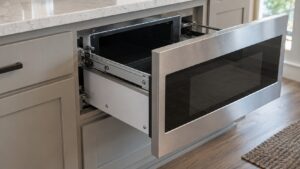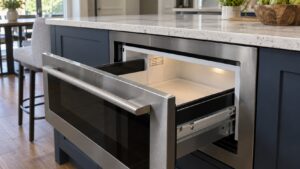
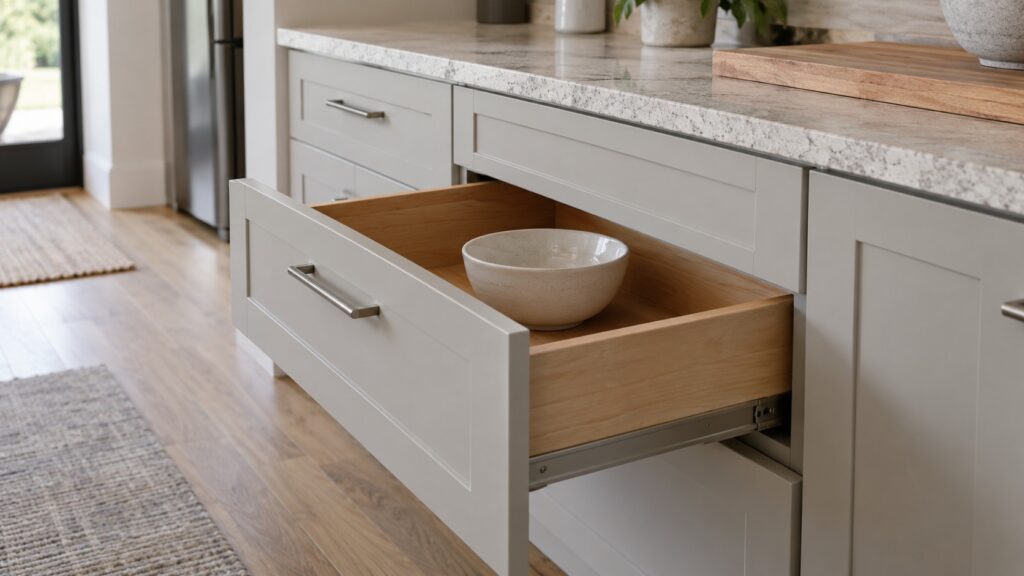
How a Wolf microwave drawer opens and closes comes down to four working parts: a motor and drive that move the drawer, tracks that carry its weight, interlock switches that confirm it is fully shut, and a control that decides when each of those is allowed to act. When you touch the open control, the control powers the motor, the drawer glides out on its tracks, and the same chain runs in reverse to close it. Microwave energy is only permitted once the interlocks report a fully closed drawer, so a drawer that will not open, close or start almost always means one of those four parts is not doing its job.
How does a Wolf microwave drawer open and close?
Unlike a hinged door that you pull, the drawer is moved for you. When you touch the control, the electronics send power to a small motor, the motor turns a drive arrangement under the drawer, and the drawer travels out or in at a steady pace. That slow, even movement is deliberate. It keeps a bowl of soup from sloshing and keeps the heavy front panel from slamming against the cabinet.
Because the movement is powered, the drawer depends on three things to be healthy: clean power at the outlet, a control that is awake, and a drive that can overcome the friction in the tracks. If the keypad is dead, nothing moves, which is why a drawer that suddenly does nothing is often a control problem and not a mechanical one. Our Wolf microwave dead panel guide covers that case.
What stops the microwave from running with the drawer open?
Safety interlocks do. A set of switches sits where the drawer meets the cavity, and each one reports whether the drawer is fully closed. The control will not allow microwave energy until every switch agrees. If one switch is dirty, misaligned or worn, the control believes the drawer is slightly open and refuses to start, even though everything looks closed to you.
That is why a drawer that closes but will not start is not a heating problem at all. The magnetron may be perfectly healthy; the control just never received the all-clear. A technician tests the switches individually, and this is not something to try behind the cabinet cover, because the high-voltage section stays dangerous after the power is off.
What carries the weight of the drawer?
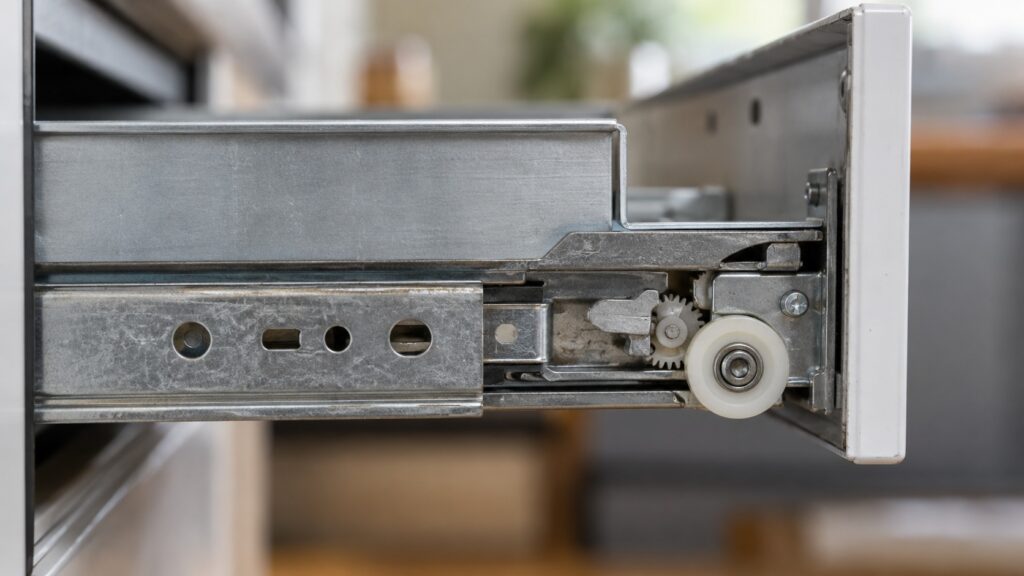
A pair of tracks with rollers supports the drawer, the food and the front panel, and guides the whole assembly in a straight line. Grease, a spilled sauce that ran past the seal or a crumb in the wrong place makes the tracks stiffer, so the motor works harder and the movement becomes slower or noisy. Over time a worn roller can let the drawer sag slightly, which also affects how the interlocks line up.
Light cleaning of the accessible parts, and keeping the drawer from being overloaded, prolongs the life of the mechanism. Our Wolf microwave drawer track maintenance guide shows what you can safely wipe and what to leave to a technician. Do not oil the tracks with a household spray, because the wrong lubricant attracts dirt and can drip toward electrical parts.
What happens to the drawer when the power goes out?
Since the motor does the moving, a drawer that is shut when the power fails stays shut until power returns. That is normal behavior and not a fault. Resist the urge to pull the front by hand or pry at the seam; forcing a motorized drawer can strip the drive, bend a track or break an interlock, and turns a simple power cut into a repair. If you need what is inside urgently, check your manual for any release procedure for your model, and otherwise wait for power.
After power returns, give the control a moment to start, then try the open control. If the drawer does not respond, check the breaker and the outlet first, then switch the breaker off for a couple of minutes and back on. If it still refuses, our Wolf microwave drawer won’t open guide walks through the next steps.
Which symptom points at which part?
Match what you see to the part that moves or senses. A drawer that does nothing and has a dark keypad points at power or the control. A keypad that lights but ignores touches points at the touchpad; our touchpad guide covers it. A drawer that grinds, hesitates or moves in jerks points at the tracks or drive. A drawer that closes but will not start points at the interlocks or the control. A drawer that starts but does not heat is a different problem, usually in the heating components, and is worth a visit rather than a guess.
Whichever applies, note it down before you call: what you pressed, what the drawer did, and whether there was any sound. That detail lets the technician bring the right drive, switch or track set. Our Wolf microwave repair page describes what a visit includes.